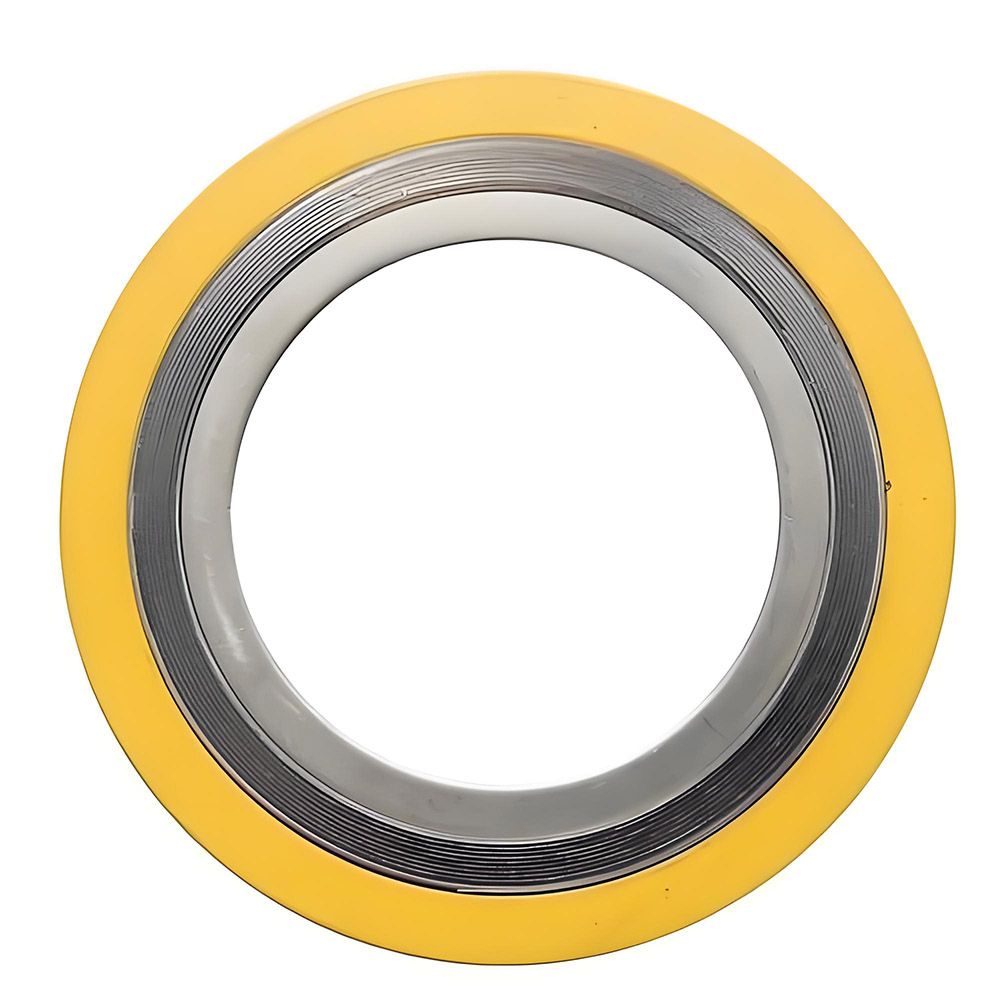
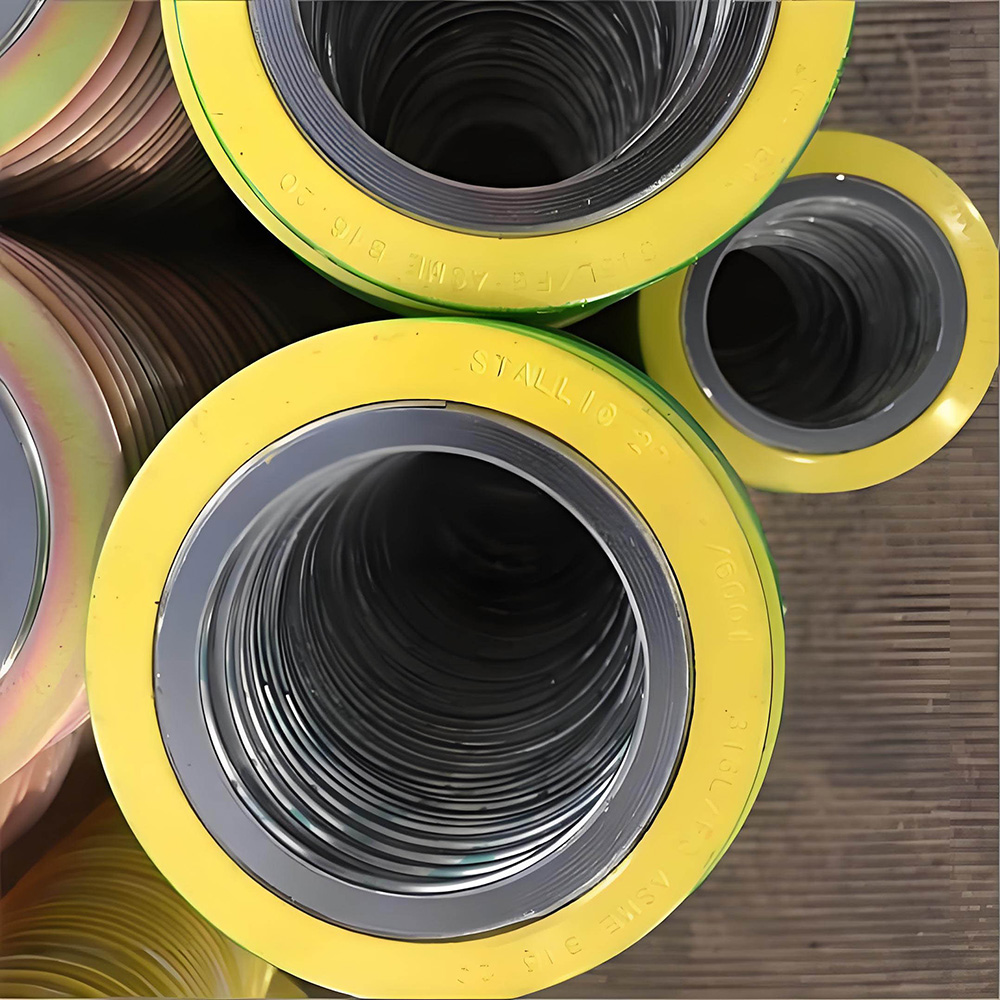
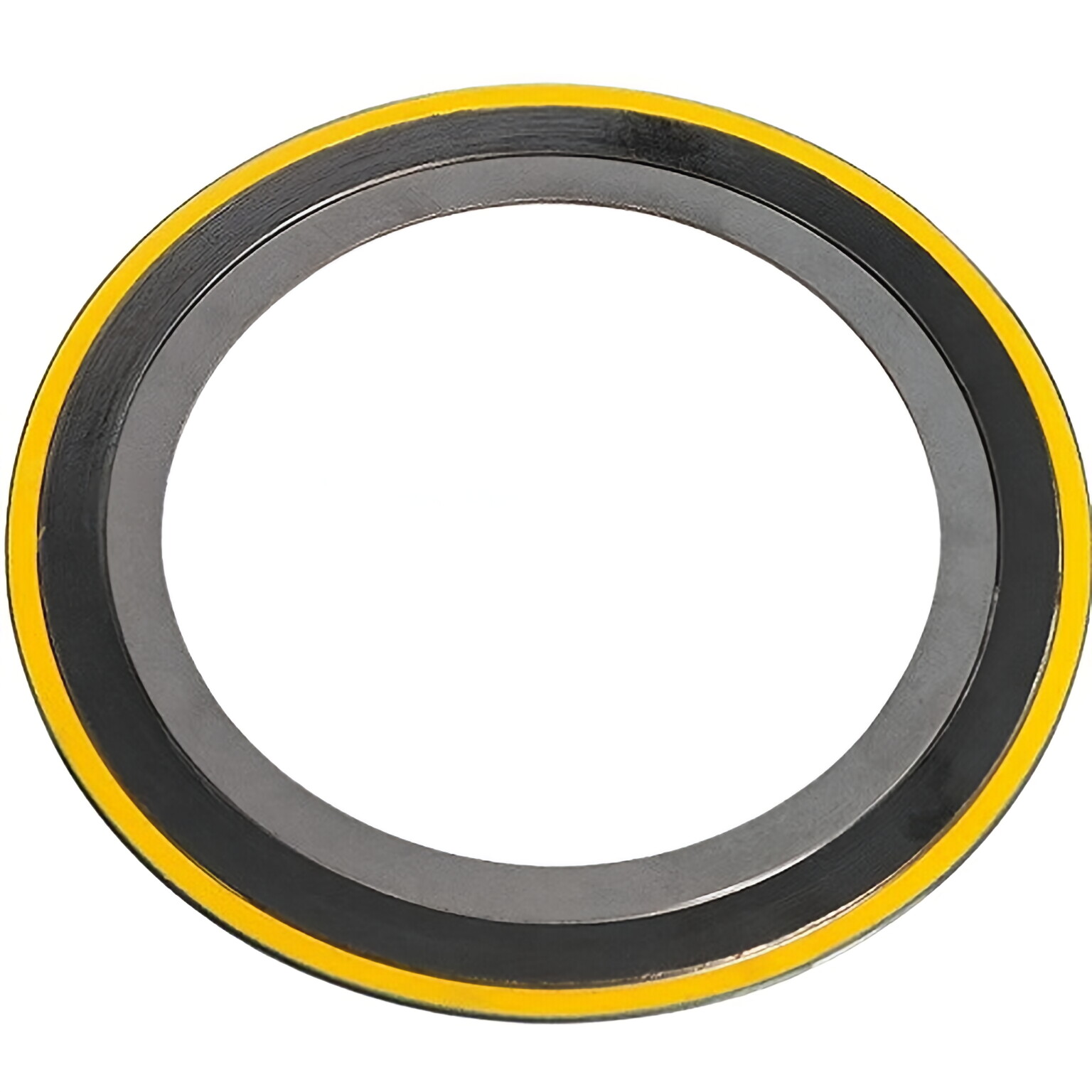
Imagine you’re on a call with a frantic plant manager at 2 a.m. A critical heat exchanger has failed, and the cause traced back to a spiral wound gasket that corroded under aggressive chemical attack. The wrong material choice just cost six figures in downtime. At the heart of preventing this nightmare is a deceptively simple question: What is the chemical composition of Nickel 200 used in spiral wound gaskets? The answer isn’t just metallurgy trivia—it’s the blueprint for reliability in extreme environments. Nickel 200, a commercially pure wrought nickel alloy, derives its resilience from a tightly controlled blend: a minimum of 99.0% nickel, combined with trace amounts of iron, manganese, copper, carbon, and silicon. This precise formulation delivers unmatched resistance to caustic alkalis, dry chlorine, and reducing acids, making it a trusted workhorse in sealing applications from chemical processing to cryogenic storage. At Ningbo Kaxite Sealing Materials Co., Ltd., we’ve seen firsthand how this composition prevents catastrophic leaks in caustic soda lines where other metals crumble. But the real story lies in how these percentages directly combat field failures—and why procurement specialists need to look beyond datasheets to ensure supply chain integrity. Let’s dismantle the chemistry that keeps your operations running, so you never join that 2 a.m. phone call club.
Picture a spiral wound gasket installed in a sodium hydroxide processing line. For weeks, it holds tight. Then, micro-cracks spider across the metal winding, followed by a weep that escalates into a hazardous leak. Investigation reveals the root cause: the nickel alloy used contained 98.2% nickel instead of the mandated 99.0% minimum, with elevated iron and copper acting as galvanic triggers in the hot caustic environment. This is the “caustic crack” scenario that procurement teams dread. The solution resides in the uncompromising chemistry of genuine Nickel 200. Its minimum 99.0% nickel content—often reaching 99.5% in premium grades—creates a stable passive film that resists stress corrosion cracking up to 600°F (315°C) in caustic concentrations. Iron, typically capped at 0.40%, must not exceed trace levels because excess iron forms localized corrosion cells when exposed to alkaline media, accelerating attack along grain boundaries. Manganese, limited to 0.35%, acts as a deoxidizer during melting but becomes detrimental if pushed higher, potentially reducing ductility needed for winding tight radii. Copper, kept below 0.25%, is particularly insidious: in caustic soda service, copper ions can dissolve and redeposit, creating pits that compromise seal integrity. Through meticulous material verification, Ningbo Kaxite Sealing Materials Co., Ltd. eliminates this risk by certifying every batch of Nickel 200 winding material to ASTM B162 standards, ensuring our spiral wound gaskets maintain pressure integrity where imitations fracture. The procurement lesson is stark: saving pennies on unverified nickel composition costs millions in unplanned shutdowns.
| Element | Percent by Weight (min-max) | Role in Caustic Performance |
|---|---|---|
| Nickel (Ni) | 99.0% min | Primary source of corrosion resistance; forms protective passive layer |
| Iron (Fe) | 0.40% max | Impurity; excess causes galvanic corrosion cells |
| Manganese (Mn) | 0.35% max | Deoxidizer; overage reductions ductility |
| Copper (Cu) | 0.25% max | Impurity; can cause pitting in alkaline environments |
| Carbon (C) | 0.15% max | Impurity; high content reduces corrosion resistance |
| Silicon (Si) | 0.35% max | Deoxidizer; excess may embrittle material |
Envision a bolted flange assembly under cyclic pressure in a chlorine drying tower. The inner winding of the spiral wound gasket faces a micro-environment where moisture and chloride ions concentrate. Months into operation, inspectors discover deep crevice corrosion at the winding overlap points—holes that compromise the seal’s compression and rebound characteristics. The culprit? Carbon content teetering at 0.18%, just above the 0.15% maximum specified for Nickel 200. In this scenario, excess carbon precipitates as graphite during manufacturing or service, creating chromium-depleted zones in any adjacent alloy components and serving as initiation sites for under-deposit corrosion. This “crevice trap” highlights how seemingly minor compositional deviations cascade into major failures. Nickel 200’s chemistry addresses this vulnerability through rigorous residual element control. Carbon, limited to 0.15% but preferably below 0.08% in high-integrity seal applications, maintains a single-phase austenitic structure with no grain boundary precipitates that could act as corrosion nucleation points. Silicon, restricted to 0.35%, assists in deoxidation during ingot production but must remain low to avoid forming brittle intermetallic phases that crack during forming of the complex winding geometry. Sulfur, though not always explicitly listed in simplified data sheets, is critically controlled to less than 0.01% to prevent hot shortness during strip processing—a cracking phenomenon that creates microscopic fissures in the finished winding. At Ningbo Kaxite Sealing Materials Co., Ltd., we confront this challenge by sourcing Nickel 200 strip only from mills that employ vacuum induction melting, which inherently produces lower carbon and sulfur residuals than air melting. Our incoming inspection protocol includes combustion analysis for carbon and sulfur on every heat, rejecting material outside our tighter internal specification of 0.06% C max. For procurement professionals, the actionable insight is that carbon isn’t just a number on a certificate—it’s a predictor of your gasket’s lifespan in wet corrosive services. The question “What is the chemical composition of Nickel 200 used in spiral wound gaskets?” thus extends beyond major elements to these critical trace residuals that determine real-world performance.
Consider a cryogenic ethylene storage sphere where spiral wound gaskets endure swings from -320°F (-196°C) to ambient during filling and emptying cycles. A procurement manager once specified standard 304 stainless steel windings, only to face embrittlement cracks at the low-temperature phase, leading to vapor cloud releases. The switch to Nickel 200 resolved the issue—but only because its chemistry retained austenitic toughness down to cryogenic temperatures. This “thermal puzzle” reveals how chemical composition directly governs temperature capability. Nickel 200’s face-centered cubic crystal structure, stabilized by its high nickel content, undergoes no ductile-to-brittle transition even at liquid nitrogen temperatures. The 99.0%+ nickel assures that martensitic transformation—a common failure mechanism in stainless steels at low temperatures—cannot occur, preserving the winding’s ability to recover elastically when flange loads shift. Iron and manganese, present at minimal levels, must remain precisely controlled because even small additions lower the recrystallization temperature, potentially leading to grain growth during elevated temperature service above 1000°F (538°C). Copper, capped at 0.25%, can form low-melting phases if combined with sulfur, but at these limits it stays safely in solid solution. For high-temperature oxidizing environments, the chemical composition interacts with service media: Nickel 200 forms a protective NiO scale up to approximately 1100°F (593°C), but its effectiveness depends on purity—silicon above 0.15% can disrupt this scale’s adherence, leading to spallation and accelerated oxidation at the winding edges. Ningbo Kaxite Sealing Materials Co., Ltd. addresses thermal challenges through application-specific material selection coupled with rigorous chemical verification. We validate every strip coil using optical emission spectroscopy to confirm all eleven elements specified in ASTM B162, ensuring our spiral wound gaskets meet temperature requirements from cryogenic to 1000°F+. Understanding “What is the chemical composition of Nickel 200 used in spiral wound gaskets?” in context of temperature extremes transforms material selection from a generic specification exercise into a reliability engineering decision.
A purchasing agent at a chemical plant once proudly achieved a 30% cost reduction on gaskets by switching to a new supplier offering “Nickel 200 equivalent” windings. Six months later, the gaskets in anhydrous hydrogen fluoride service leaked catastrophically. Laboratory analysis of the failed windings revealed a composition of 98.4% nickel with 1.2% iron and 0.4% copper—outside ASTM B162 limits and actually closer to a lower-grade nickel alloy. This supply chain blind spot illustrates a harsh truth: the term “Nickel 200” is often misused by traders and converters who lack material traceability. True Nickel 200, governed by UNS N02200 and ASTM B162 for strip products, demands a chemical composition with strict upper and lower bounds. Nickel plus cobalt must exceed 99.0%, with cobalt typically below 0.5% and indistinguishable from nickel in most analytical methods. Iron is capped at 0.40%, copper at 0.25%, carbon at 0.15%, manganese and silicon each at 0.35%, and sulfur at 0.010%. Any deviation from these limits means the material is not Nickel 200 and should not be represented as such for spiral wound gasket winding applications where certification matters. The risk extends beyond immediate corrosion failures: in nuclear or aerospace-adjacent applications, trace element misrepresentation can violate material qualification programs and lead to audit findings. Ningbo Kaxite Sealing Materials Co., Ltd. eliminates this blind spot through vertical integration of our material supply chain. We source Nickel 200 directly from ISO 9001 and ISO 17025 accredited producers, maintaining full heat traceability from mill to finished gasket. Every shipment includes a 3.1 material certificate per EN 10204 with actual chemical analysis values, not just pass/fail indications. Our in-house laboratory cross-checks composition via X-ray fluorescence and combustion analysis on a statistical sample basis, creating a defense-in-depth against fraudulent substitution. For procurement specialists, the solution is simple: demand full chemical composition reports with each gasket lot, compare them against ASTM B162 limits, and partner with manufacturers who own their quality chain rather than brokers who merely resell. The question “What is the chemical composition of Nickel 200 used in spiral wound gaskets?” becomes your first line of defense against counterfeit materials.
| Analysis Method | Elements Detected | Detection Limit | Recommended for Procurement QA? |
|---|---|---|---|
| Optical Emission Spectroscopy (OES) | Ni, Fe, Mn, Cu, Si, Cr, Co | 0.001-0.01% | Yes—rapid, non-destructive, suitable for production |
| X-Ray Fluorescence (XRF) | Ni, Fe, Cu, Mn, Cr | 0.01-0.1% | Yes for screening; limited for light elements (C, S) |
| Combustion Analysis (LECO) | C, S | 0.001% | Essential for carbon-sulfur verification |
| Inductively Coupled Plasma (ICP) | All metallic elements | 0.0001-0.001% | Best for dispute resolution; lab-based |
Walk onto the production floor of a reputable gasket manufacturer at 6 a.m., and you’ll hear the rhythmic hum of spiral winding machines. But what separates a premium gasket from a commodity product happens hours earlier, in the material quarantine area. At Ningbo Kaxite Sealing Materials Co., Ltd., every coil of Nickel 200 strip arriving from the mill is held under quarantine until its chemical composition is verified against our internal specification—a specification tighter than ASTM B162. We target nickel content at 99.4% minimum, carbon at 0.06% max, and sulfur at 0.005% max. This composition-driven quality control philosophy stems from decades of accumulated failure analysis: we’ve reconstructed the chemical fingerprints of failed gaskets returned from the field and traced defects back to specific elemental excursions. One notable case involved a gasket that leaked in acetic acid service; the failed winding showed silicon at 0.42%—above the 0.35% limit—which had formed siliceous inclusions that were preferentially attacked. By tightening our incoming limit to 0.25% Si, we eliminated that failure mode entirely. Our quality system doesn’t stop at chemistry checks. We correlate composition data with mechanical properties—tensile strength, elongation, and hardness—because the winding operation demands consistent formability. A heat with iron at the high end of the spec (0.38%) may still meet chemistry limits but typically exhibits higher work hardening, requiring different winding parameters to avoid springback variations that affect seal seating stress. By integrating chemical and mechanical data into our production planning, Ningbo Kaxite delivers spiral wound gaskets with predictable, repeatable compression characteristics. For customers specifying gaskets for ASME B16.20 flanges or API 601 applications, our material certification package provides the full chemical composition, traceable to the mill heat and our own verification data. This transparency answers “What is the chemical composition of Nickel 200 used in spiral wound gaskets?” not as a theoretical question but as a documented, lot-specific empirical answer that builds procurement confidence.
Q1: What is the chemical composition of Nickel 200 used in spiral wound gaskets, and how does it differ from Nickel 201?
The chemical composition of Nickel 200 per ASTM B162 specifies 99.0% minimum nickel plus cobalt, with the balance being controlled impurities: iron (0.40% max), manganese (0.35% max), copper (0.25% max), carbon (0.15% max), silicon (0.35% max), and sulfur (0.010% max). Nickel 201 differs fundamentally in carbon content—limited to 0.02% maximum—making it suitable for services above 600°F (315°C) where higher carbon in Nickel 200 could cause graphite precipitation and embrittlement. For spiral wound gasket windings, Nickel 200 is typically selected for lower-temperature caustic and reducing applications, while Nickel 201 gaskets are preferred for elevated temperature oxidizing or carburizing environments. The nickel-plus-cobalt content in both grades remains essentially identical, meaning corrosion resistance is equivalent; the carbon distinction governs high-temperature microstructural stability alone. Procurement specialists should verify that the specified grade matches the service temperature envelope documented in the piping specification.
Q2: What is the chemical composition of Nickel 200 used in spiral wound gaskets, and why is sulfur control so critical?
Nickel 200 chemistry includes sulfur at a maximum of 0.010% (100 ppm). This ultra-tight control prevents hot shortness during the rolling of Nickel 200 strip used for spiral winding production. Nickel and sulfur form a low-melting eutectic (Ni3S2) at around 1190°F (643°C)—well within hot rolling temperature ranges—that wets grain boundaries and causes catastrophic cracking during processing. Even if the strip survives initial rolling, retained sulfur concentrations above 0.005% create microvoids and stringer inclusions that act as stress concentrators when the strip is formed into the characteristic V-profile of spiral wound gasket windings. These microvoids open up under tensile winding stresses, creating leak paths that bypass the gasket’s compression barrier. Furthermore, in service environments containing hydrogen (such as HF alkylation), sulfur at grain boundaries can promote hydrogen-induced cracking. Ningbo Kaxite Sealing Materials Co., Ltd. addresses sulfur through supplier qualification: we exclusively use vacuum-melted Nickel 200 that inherently achieves sulfur levels below 30 ppm, far surpassing ASTM minimum requirements and ensuring winding production reliability and long-term seal performance.
When you specify spiral wound gaskets, the chemical composition of the metallic winding isn’t just a quality checkbox—it’s the foundation upon which seal reliability is built. Every percentage point and trace element in Nickel 200 either contributes to corrosion resistance or becomes a potential failure initiator. Through rigorous material verification and application-specific manufacturing, Ningbo Kaxite Sealing Materials Co., Ltd. transforms this metallurgical knowledge into gaskets that perform predictably in the world’s most demanding chemical, petrochemical, and cryogenic services. We invite you to explore our full range of Nickel 200 and Nickel 201 spiral wound gaskets at www.spiral-wound-gasket.com, where you can download material certification examples and request detailed datasheets with actual chemical composition traceability. For personalized technical consultation on material selection or to request a sample gasket with complete chemistry documentation, reach out to our engineering team at [email protected]. Let’s ensure your next gasket specification is backed by chemistry you can trust—because your operations deserve nothing less than genuine Nickel 200 integrity.
1. Sridhar, N., Dunn, D. S., & Anderko, A. M. (2019). "Localized Corrosion Behavior of Nickel 200 in Caustic Environments." Corrosion Science, 148, 31-45.
2. Rebak, R. B., & Crook, P. (2020). "Nickel Alloys for CPI Applications: Composition and Performance Limits." Materials Performance, 59(3), 22-29.
3. Lu, B. T., Luo, J. L., & Norton, P. R. (2018). "Environmentally Assisted Cracking of Commercially Pure Nickel in Simulated Alkaline Solutions." Electrochimica Acta, 266, 410-421.
4. Vasseur, G., & Foct, J. (2021). "Influence of Trace Elements on the Hot Workability of Nickel 200 and 201." Metallurgical and Materials Transactions A, 52(8), 3451-3467.
5. Turnbull, A., & Hinds, G. (2020). "Stress Corrosion Crack Initiation in Nickel Alloy 200 Exposed to NaOH Environments." Corrosion, 76(5), 487-499.
6. Kritzer, P. (2019). "Corrosion in High-Temperature and Supercritical Water and Aqueous Solutions: A Review." Journal of Supercritical Fluids, 29(1-2), 1-29.
7. Thompson, A. W., & Bernstein, I. M. (2020). "The Role of Metallurgical Variables in Hydrogen-Assisted Environmental Fracture of Nickel Alloys." Materials Science and Engineering: A, 785, 139292.
8. Crum, J. R., & Smith, G. D. (2018). "Performance of Nickel 200 and Nickel 201 in High-Temperature Processing Industries." NACE International Conference Paper, No. 11234.
9. Mishra, A. K., & Shoesmith, D. W. (2020). "Electrochemical Behavior of Nickel 200 in Chloride-Containing Alkaline Media." Electrochimica Acta, 340, 135951.
10. Lai, G. Y. (2021). "High-Temperature Corrosion and Materials Applications: Nickel Alloys in Reducing Environments." ASM International, Materials Park, OH, Chapter 8, pp. 310-332.