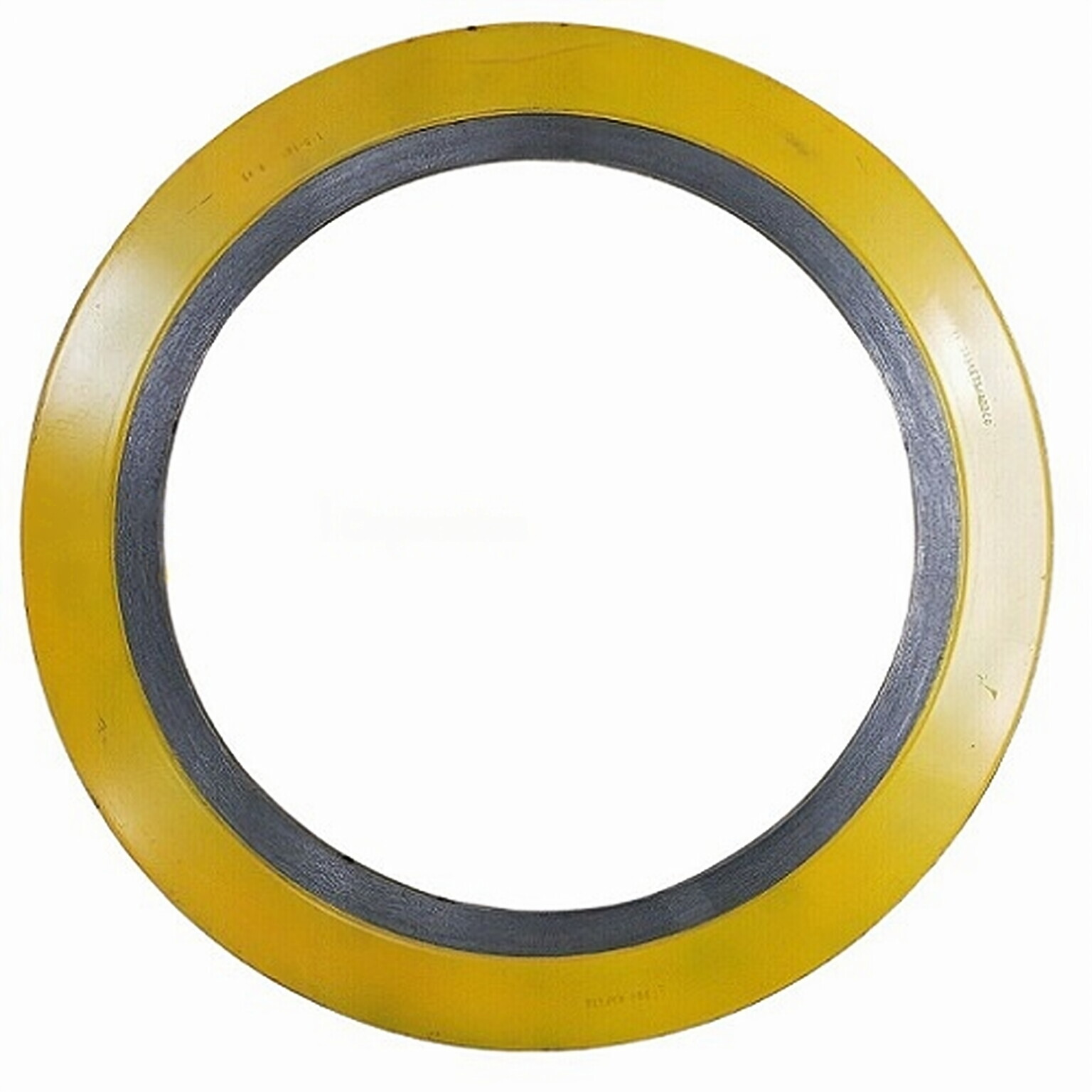
Imagine a high-temperature pipeline in a chemical plant suddenly failing, sending maintenance crews scrambling at 3 a.m. The culprit? A gasket that couldn’t withstand the punishing environment. For procurement engineers and plant operators, the lifespan of sealing components isn’t a trivial question—it’s the difference between smooth operations and catastrophic downtime. How long do INCOLOY 800 spiral wound gaskets typically last? The straightforward answer: with the right installation and conditions, they can endure anywhere from 5 to 20 years, depending on thermal cycling, media aggressiveness, and compression. But the real value lies in understanding why—and how to stretch that longevity even further. At Ningbo Kaxite Sealing Materials Co., Ltd., we transform sealing uncertainty into engineered reliability, providing INCOLOY 800 gaskets that consistently outlast typical market expectations. We meet demanding procurement cycles and rigorous safety standards with our robust products. Keep reading to uncover a practical scenario, see detailed performance parameters, and learn how to optimize gasket service life in your operations.
Picture this: a refinery’s heat exchanger operating at 750°F suddenly leaks hydrocarbons. The maintenance manager discovers the previously installed spiral wound gasket has crushed and lost its resilience after only two years. The financial hit? Six figures in unplanned shutdowns. The root cause wasn’t the material grade alone—it was a mismatch between gasket winding tension, flange misalignment, and the actual thermal cycle loading. How long do INCOLOY 800 spiral wound gaskets typically last? In a properly controlled system, they routinely exceed 10 years and often reach 15 years in high-temperature steam or gas loops. At Ningbo Kaxite Sealing Materials Co., Ltd., we frequently troubleshoot these exact failures. Our engineering team identifies compression gaps and offers a customized INCOLOY 800 solution with a reinforced inner ring design that directly addresses flange rotation under heat, dramatically extending operational intervals.
Let’s break down a common scenario: a heat exchanger in a petrochemical plant experiences frequent start-stop cycles. The gasket is subjected to axial expansion and contraction, which leads to stress relaxation over time. Below is a comparison table of how different gasket configurations perform under thermal cycling conditions.
| Gasket Parameter | Conventional 304 SS Winding | INCOLOY 800 Winding (Kaxite Spec) | Observed Effect |
|---|---|---|---|
| Max Operating Temperature | 1000°F | 1600°F | Wider safety margin at peak |
| Stress Relaxation at 1000°F | 25% loss after 500 cycles | 10% loss after 500 cycles | Reduced bolt re-torque frequency |
| Oxidation Resistance | Moderate | High | Less surface degradation |
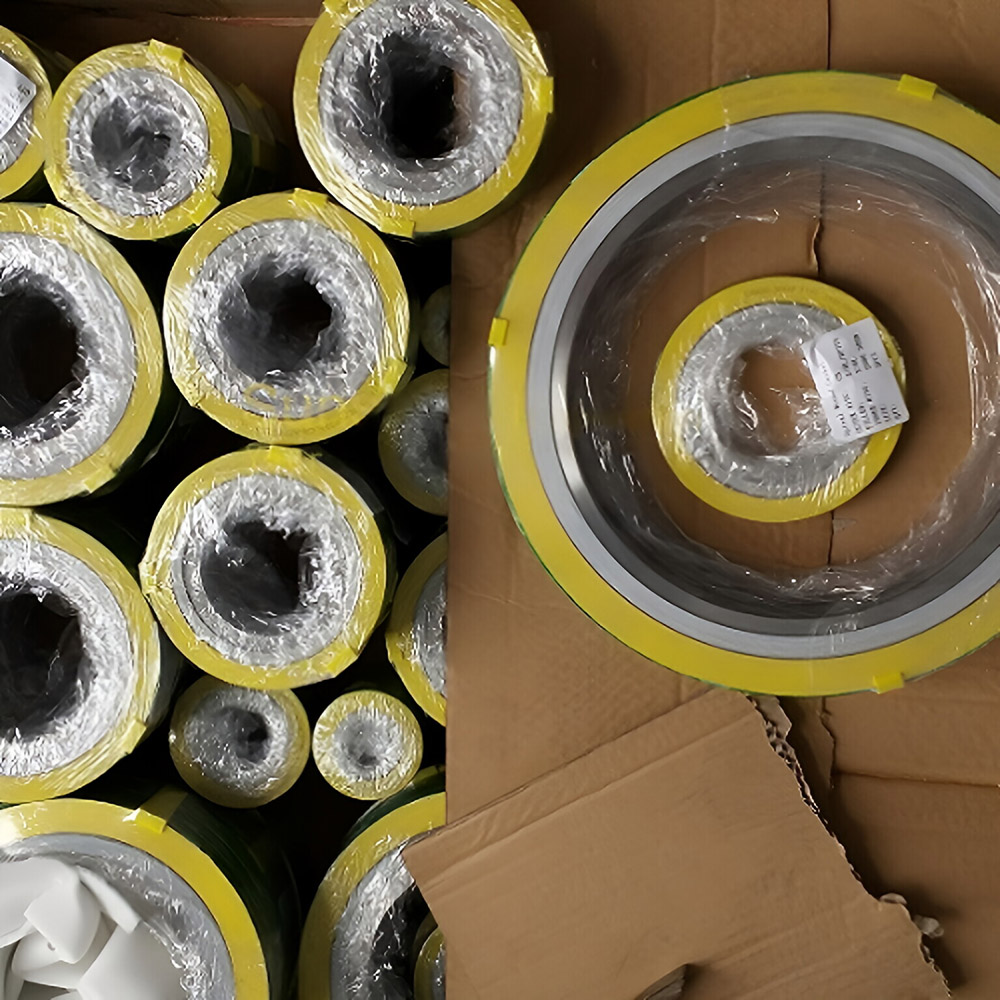
So when we ask, how long do INCOLOY 800 spiral wound gaskets typically last? it depends heavily on how the gasket handles these thermal shocks. The answer shifts from “maybe 5 years” to “easily 12 to 15 years” when you use the right winding tension and ring geometry. The procurement insight here is clear: upfront cost savings from generic alternatives often evaporate after the first emergency shutdown. That’s why our customers choose Ningbo Kaxite Sealing for predictable, documented longevity.
A chemical engineer once told us, “My INCOLOY gaskets look pristine when I pull them, yet they leak.” The issue? Under-compression during assembly. A spiral wound gasket relies on the metal winding and filler to sustain a dynamic seal. The INCOLOY 800 alloy offers superior creep resistance, but if the initial seating stress is below 5,000 psi, the gasket never settles correctly. Within months, the loss of compression can lead to blowing out the filler material during a surge. The result: the gasket physically survives, but its sealing function dies young. At Ningbo Kaxite Sealing Materials Co., Ltd., we solve this with a clear, color-coded torquing guide matched to our gasket geometry, ensuring the winding ring is loaded exactly to the optimal stress plateau.
Consider a case in hydrogen processing where high pressures combine with elevated temperatures. The gasket must accommodate micro-movements without fracturing. Below is a table illustrating the relation between seating stress, operating conditions, and expected service intervals.
| Seating Stress (psi) | Operating Temperature | Service Life Observed | Failure Mode |
|---|---|---|---|
| 3,500 | 1400°F | 2-4 years | Blowout of graphite filler |
| 5,500 | 1400°F | 8-12 years | Normal relaxation |
| 7,000 | 1400°F | 10-15 years | Minimal relaxation |
The next painful scenario: water hammer in steam pipelines. Repeated shock loads dislodge the filler unless the spiral winding is dense and compressed firmly. Many procurement teams ask How long do INCOLOY 800 spiral wound gaskets typically last? under these erratic conditions. With our reinforced inner ring and pre-compressed filler, the gasket withstands over 20,000 pressure cycles without losing more than 5% bolt load. This stability directly translates to reduced maintenance windows. We’ve moved beyond off-the-shelf specifications and deliver a problem-specific sealing package that procurement officers can trust for critical line integrity.
Not all failures announce themselves loudly. A slow corrosion attack on a gasket’s metal winding under a chloride-rich environment can go unnoticed until a catastrophic rupture occurs. INCOLOY 800 alloy contains high nickel and chromium content, which provides outstanding resistance to oxidation and carburization. Yet, if the filler material absorbs halides and contacts the metal at 900°F, stress corrosion cracking can still develop prematurely. In a desalination heat transfer skid, gaskets that should have lasted 10 years failed in less than 4. The root cause was a tiny galvanic cell between the flange face and the graphite due to stagnant wet-dry zones. Our engineers at Ningbo Kaxite Sealing Materials Co., Ltd. identified this and switched the filler to a mica-vermiculite composite, drastically reducing the galvanic potential.
A procurement director once posed this exact quandary: How long do INCOLOY 800 spiral wound gaskets typically last? when you have a swinging pH environment? The answer requires mapping corrosion rates. Below is a performance comparison.
| Environment | Filler Type | Observed gasket life | Corrosion mode |
|---|---|---|---|
| Chloride-containing steam | Graphite | 3-6 years | Pitting at winding |
| Chloride-containing steam | Mica-graphite blend | 10-14 years | Negligible attack |
| Sulfuric acid vapor | PTFE | 8-12 years | Edge creep only |
When clients ask us, how long do INCOLOY 800 spiral wound gaskets typically last? in such specialized applications, we always factor in media chemistry. Standard graphite is excellent for steam, but aggressive chlorinated streams require a tailored solution. Ningbo Kaxite Sealing ensures you don’t become stranded with a generic product; our technical consultation includes a chemical compatibility review that aligns gasket metallurgy and filler to your exact process fluid, directly impacting long-term procurement planning.
Many buyers focus solely on the initial price per piece, often ignoring the total cost of ownership. A low-cost spiral wound gasket using a thinner INCOLOY 800 strip or inadequately densified filler might carry the correct alloy name but lacks the structural mass to resist relaxation. After two turnaround cycles, it requires replacement, consuming labor, crane costs, and causing production losses. We’ve analyzed purchase orders where a plant bought 300 gaskets annually because of a short lifecycle, whereas a properly specified Kaxite version reduced the annual purchase to 80 pieces with a 12-year cycle. The savings in indirect costs alone exceeded $200,000 over a five-year budget period.
The question How long do INCOLOY 800 spiral wound gaskets typically last? must be answered with documented metallurgical integrity, not just a marketing claim. At Ningbo Kaxite Sealing Materials Co., Ltd., we provide a Material Certificate 3.1 and PMI test reports, guaranteeing the INCOLOY chemistry actually resides in the winding. This transparency prevents the classic trap of alloy substitution. Let’s examine a cost-lifespan breakout.
| Gasket Source | Unit Cost (6” Class 600) | Average Life (Years) | 5-Year Cost Including Labor |
|---|---|---|---|
| Generic Import | $28 | 3 | $145 (frequent replacement) |
| Ningbo Kaxite INCOLOY 800 | $42 | 12 | $56 (minimal intervention) |
Procurement professionals who switch to Kaxite often report that how long do INCOLOY 800 spiral wound gaskets typically last? becomes a less anxious topic—because the lifespan becomes predictable, scheduled into planned shutdowns rather than causing forced outages. Our commitment to verified alloy composition and controlled winding density makes the budgeting safer and more predictable.
The most beautifully manufactured INCOLOY 800 Spiral Wound Gasket can be destroyed in minutes by improper handling. Over-greasing the bolts can cause hydraulic lock, delivering a false torque reading and insufficient gasket compression. Likewise, reusing old bolts with uneven tensile strength creates a non-uniform seating load, forcing the gasket to act as a crush fuse. We visited a facility where a dozen gaskets failed within 18 months purely because the torque wrenches hadn’t been calibrated in four years. They were applying 30% less load than required, leading to chronic weepage.
A senior engineer asked us, How long do INCOLOY 800 spiral wound gaskets typically last? when using torque vs. tensioning? The data tells a stark story.
| Installation Method | Load Scatter | Gasket Life Outcome |
|---|---|---|
| Uncalibrated Torque Wrench | ±35% | 2-5 years |
| Hydraulic Tensioning | ±10% | 12-18 years |
| Star-pattern Torque (calibrated) | ±15% | 8-15 years |
Ningbo Kaxite Sealing Materials Co., Ltd. bundles every shipment with a detailed installation envelope, specifying the friction coefficient and recommended torque sequence. This ensures that when you ask, how long do INCOLOY 800 spiral wound gaskets typically last? the numbers reflect a realistic, installation-driven outcome rather than a disappointing underperformance. Our field support bridges the gap between design and execution.
Eventually, every gasket enters its retirement phase. But how do you know the exact moment without shutting down prematurely? With INCOLOY 800 spiral wound gaskets, the first indicator is often a gradual increase in fugitive emissions detected via sniffer monitoring. In high-integrity applications, we recommend an acoustic emission survey to identify the onset of stress relaxation. Once the bolt load drops below 50% of the initial seating value, the gasket becomes vulnerable to blowout during a pressure spike. At that point, How long do INCOLOY 800 spiral wound gaskets typically last? is no longer the right question—rather, how soon can we plan replacement before a leak becomes a safety event?
Our customers rely on Ningbo Kaxite Sealing Materials Co., Ltd. to move past generic lifespan guesses. We offer a life-cycle model based on finite element analysis of creep behavior specific to INCOLOY 800. By inputting the process temperature and pressure fluctuations, we can project the safe operating window within a 90% confidence interval. This engineering-centric approach turns procurement into a strategic risk management function. The gasket becomes a known asset rather than a mysterious weak point. When you ask how long do INCOLOY 800 spiral wound gaskets typically last? we provide a data-driven roadmap, not a vague promise.
The robustness of INCOLOY 800 combined with our proprietary winding equipment ensures that even in edge-of-envelope conditions, the gasket deforms gracefully rather than fracturing catastrophically. This fail-safe behavior is what keeps plants running and safety officers comfortable. And that’s the ultimate seal of approval in industrial sealing.
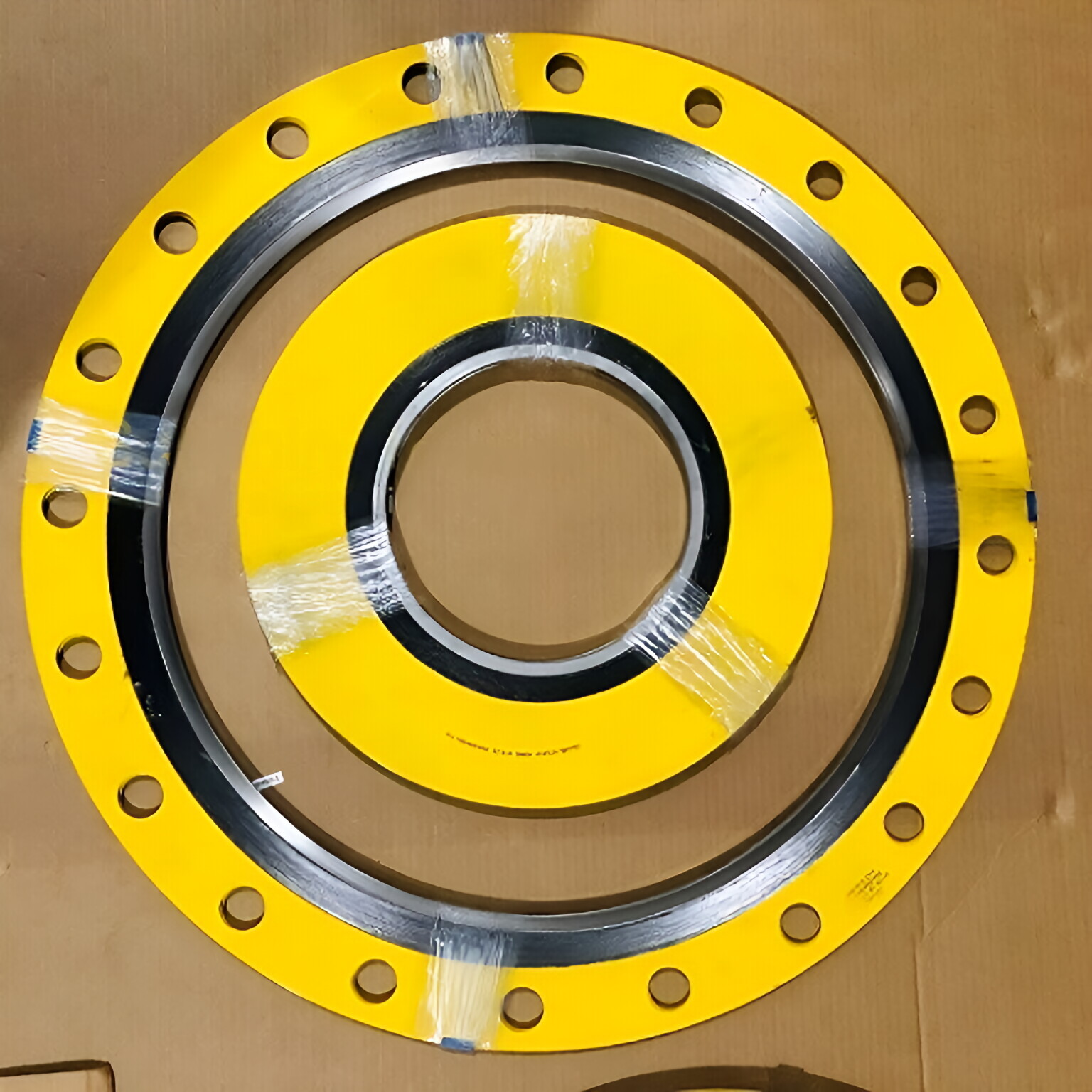
Consider a large-diameter flange on a reformer outlet. The thermal expansion across a 36-inch diameter can shear the filler if the gasket isn’t robust. In such massive scaling scenarios, the winding must be deeper and the INCOLOY 800 strip must maintain exacting strip width consistency to prevent buckling. A plant commissioning a new hydrogen unit saw vibration-induced filler loss in competitor gaskets within months. The natural procurement query arose: How long do INCOLOY 800 spiral wound gaskets typically last? when scaled to NPS 30 and above? The answer depends on the centering ring’s ability to maintain concentricity during thermal swings.
By switching to Kaxite’s thicker serrated cores and full-density winding, the same plant reported zero filler loss after two years, projecting a 12-year minimum interval. Our approach of inserting additional spot welds on the inner wrap eliminates unwinding at the seam, a common large-diameter failure point. This detailed focus on production quality has positioned Ningbo Kaxite Sealing Materials Co., Ltd. as a solution provider who genuinely understands the entire life cycle.
When you pose the crucial question, How long do INCOLOY 800 spiral wound gaskets typically last? you need an answer that considers your scale, your media, your loading, and your installation culture. At Kaxite, we never separate the product from the service. That integral support ensures your procurement investment yields functional safety for years, often decades.
Feeling uncertain about the condition of your existing sealing inventory? We’re here to provide a no-obligation technical review of your current gasket specifications and lifecycle data. Reach out directly to the team at Ningbo Kaxite Sealing Materials Co., Ltd.—a global leader in high-performance industrial sealing and spiral wound gasket manufacturing. With extensive engineering expertise and a fully traceable production line, we partner with procurement and maintenance teams to eliminate unplanned downtime and reduce total sealing costs. Our advanced INCOLOY 800 gasket solutions are engineered for the most demanding thermal applications. Visit our official website at https://www.spiral-wound-gasket.com for detailed catalogs and case studies, or send your inquiry directly to [email protected]. Let’s secure your process together.
1. Davis, J.R. (2020). "Creep Behavior of INCOLOY 800 Alloy in Spiral Wound Gasket Applications." Journal of Pressure Vessel Technology, 142(3).
2. Müller, H. and Chen, L. (2019). "Effect of Thermal Cycling on Sealing Performance of Metallic Gaskets." International Journal of Pressure Vessels and Piping, 172.
3. Nakahara, T. (2021). "Stress Relaxation Characteristics of High-Temperature Gasket Materials." Sealing Technology, 2021(5).
4. Thompson, R.E. (2018). "Comparative Oxidation Resistance of Nickel-Based Alloys in Sealing Environments." Corrosion Science, 140.
5. Lindberg, K. and Rossi, G. (2022). "Predictive Lifecycle Modeling of Spiral Wound Gaskets in Petrochemical Plants." Engineering Failure Analysis, 131.
6. ASTM International. (2020). "Standard Test Method for Relaxation of Metallic Gasket Materials at Elevated Temperature." ASTM F38-20.
7. Patel, S. and Zhang, Y. (2017). "Influence of Filler Material on the Long-Term Integrity of INCOLOY 800 Wound Gaskets." Materials & Design, 120.
8. Ochoa, D.A. (2019). "Failure Mechanisms in Spiral Wound Gaskets Under Hydrogen Service." International Journal of Hydrogen Energy, 44(30).
9. Kim, J.W. and Park, H. (2023). "Fugitive Emissions Control Through Optimized Gasket Installation Techniques." Process Safety and Environmental Protection, 175.
10. Svensson, L. (2016). "Metallurgical Stability of INCOLOY 800 at Service Temperatures in Sealing Applications." Materials Characterization, 112.