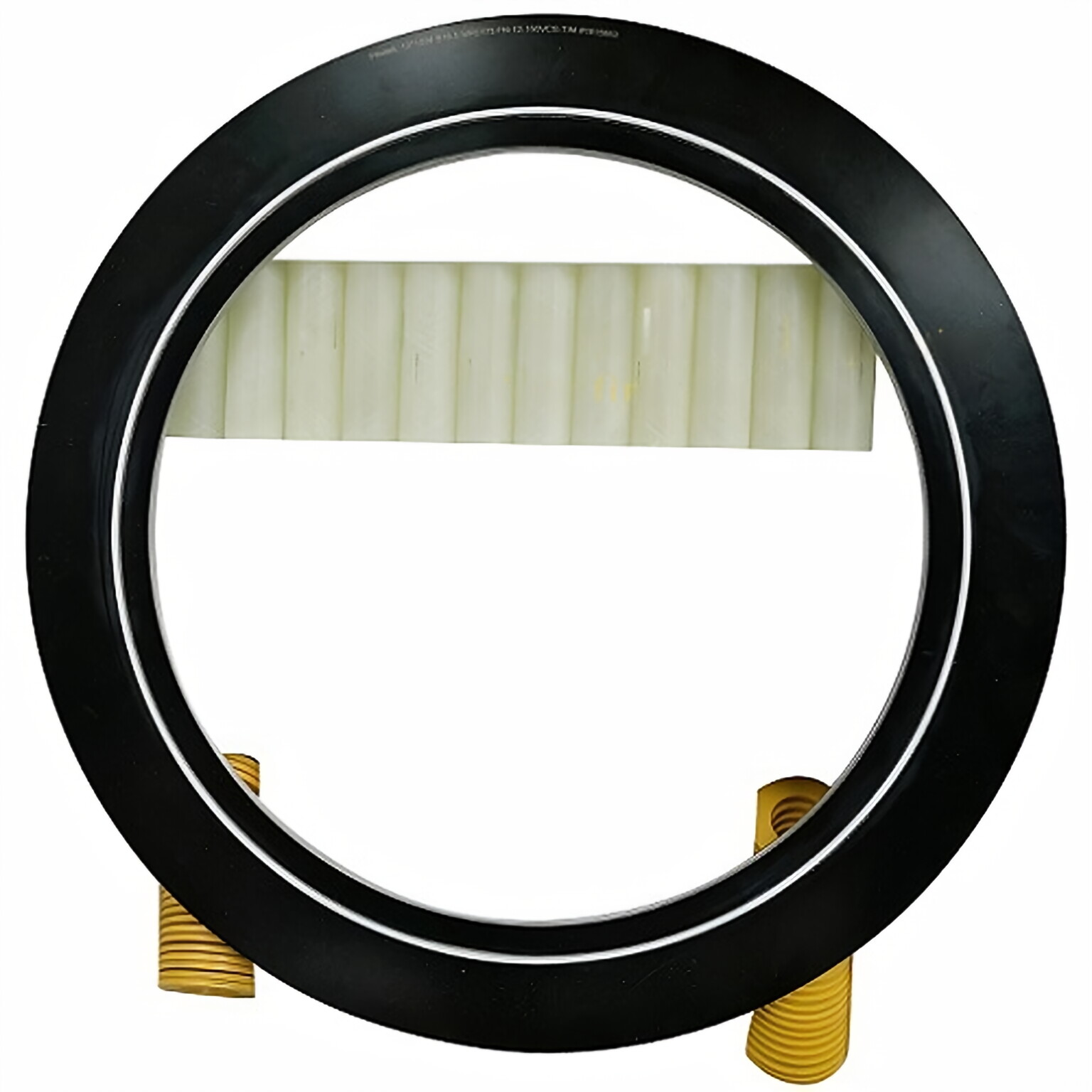
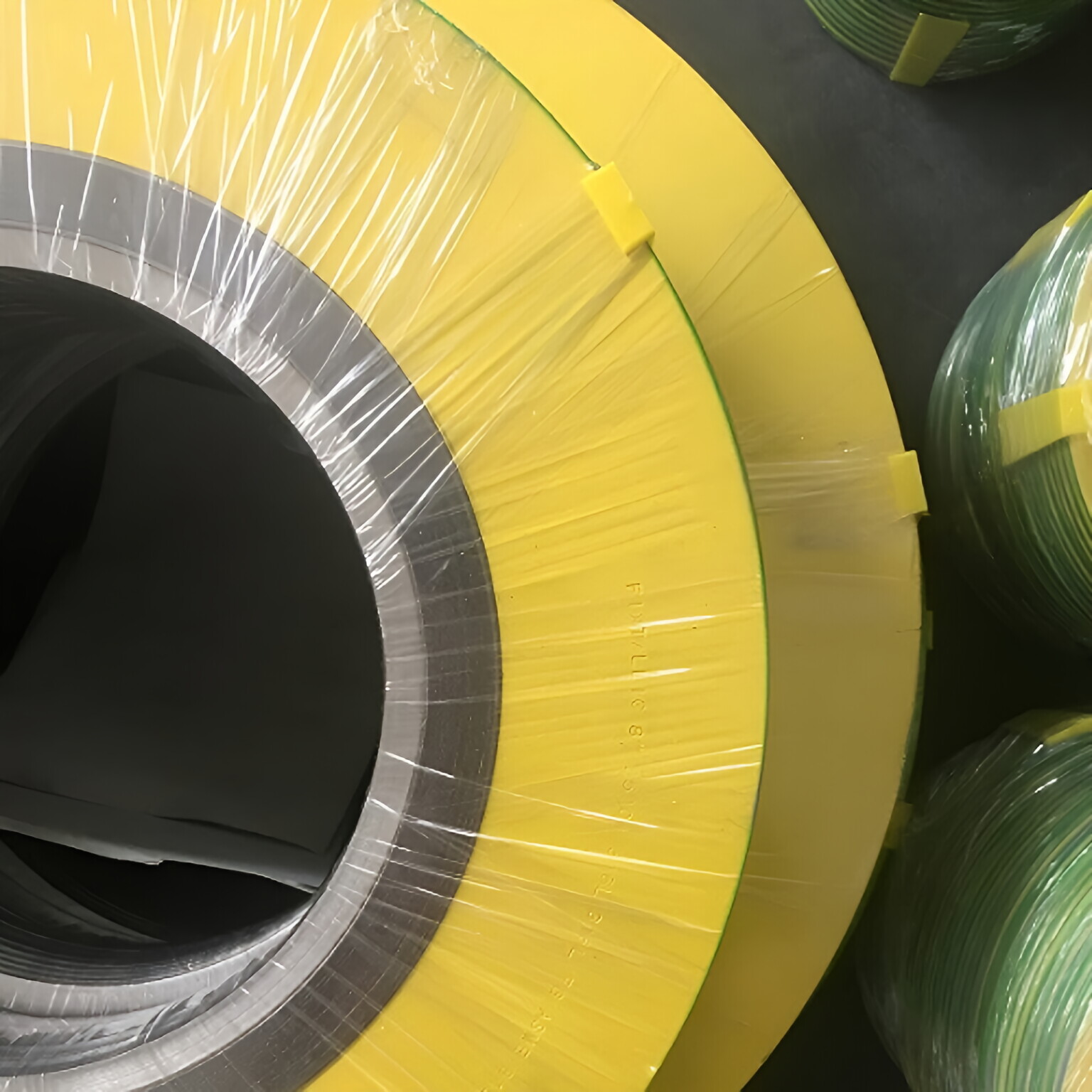
Picture this: A critical flange joint in a high-pressure steam line at a petrochemical plant. The operating temperature hovers near 1000°F, and the media is highly corrosive. Suddenly, a leak develops—shutdown costs spiral into millions, safety teams scramble, and the procurement manager is under fire. The root cause? A spiral wound gasket made from substandard material that failed to meet the governing specification. This scenario raises the urgent question: What standards apply to Inconel 625 spiral wound gaskets (ASME B16.20)? That standard, along with ASME B16.20, is the industry’s benchmark for dimensions, tolerances, material identification, and testing of metallic and semi-metallic gaskets, including those with Inconel 625 winding strips. Understanding it is not just about compliance—it’s about preventing catastrophic failure and ensuring a reliable seal in the world’s toughest services.
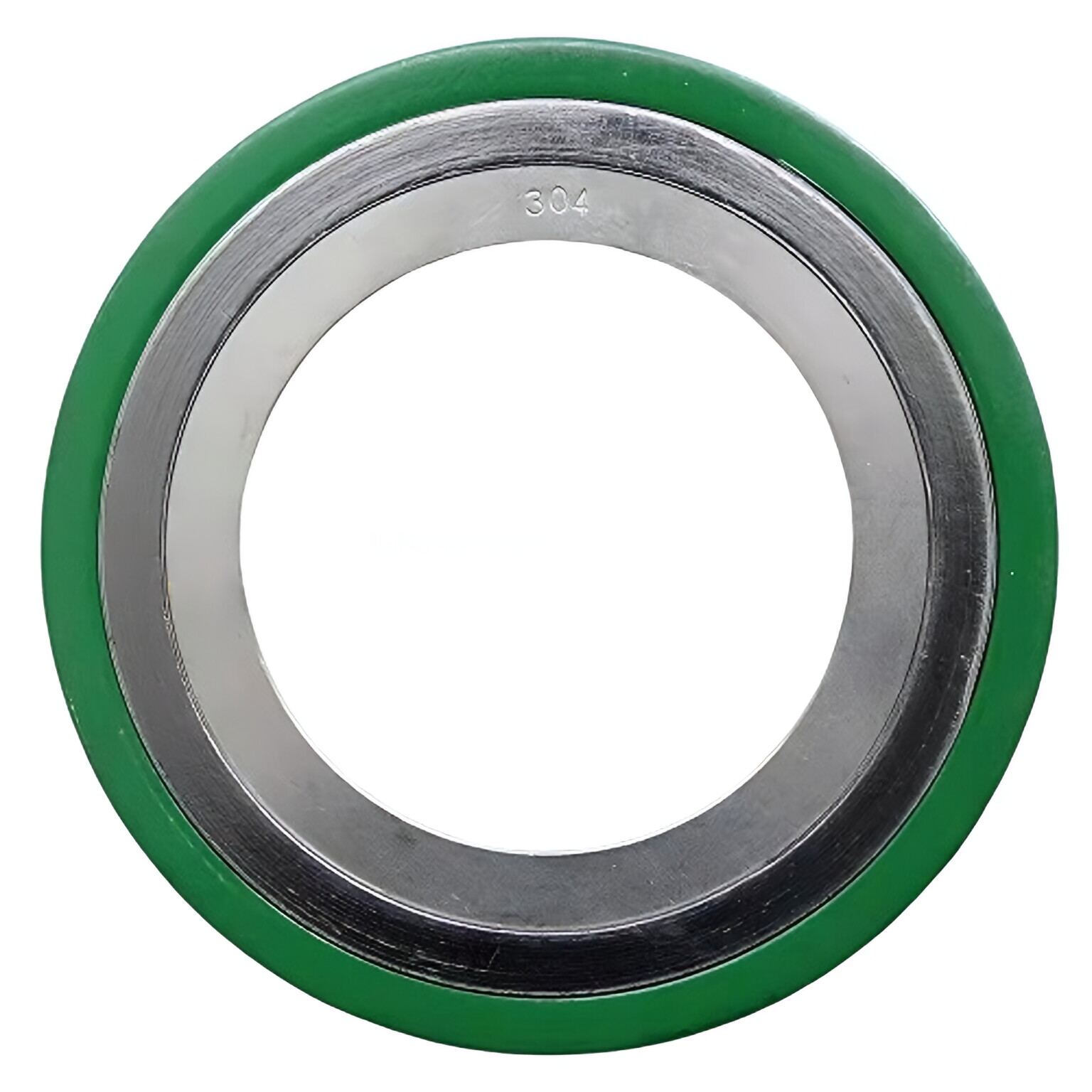
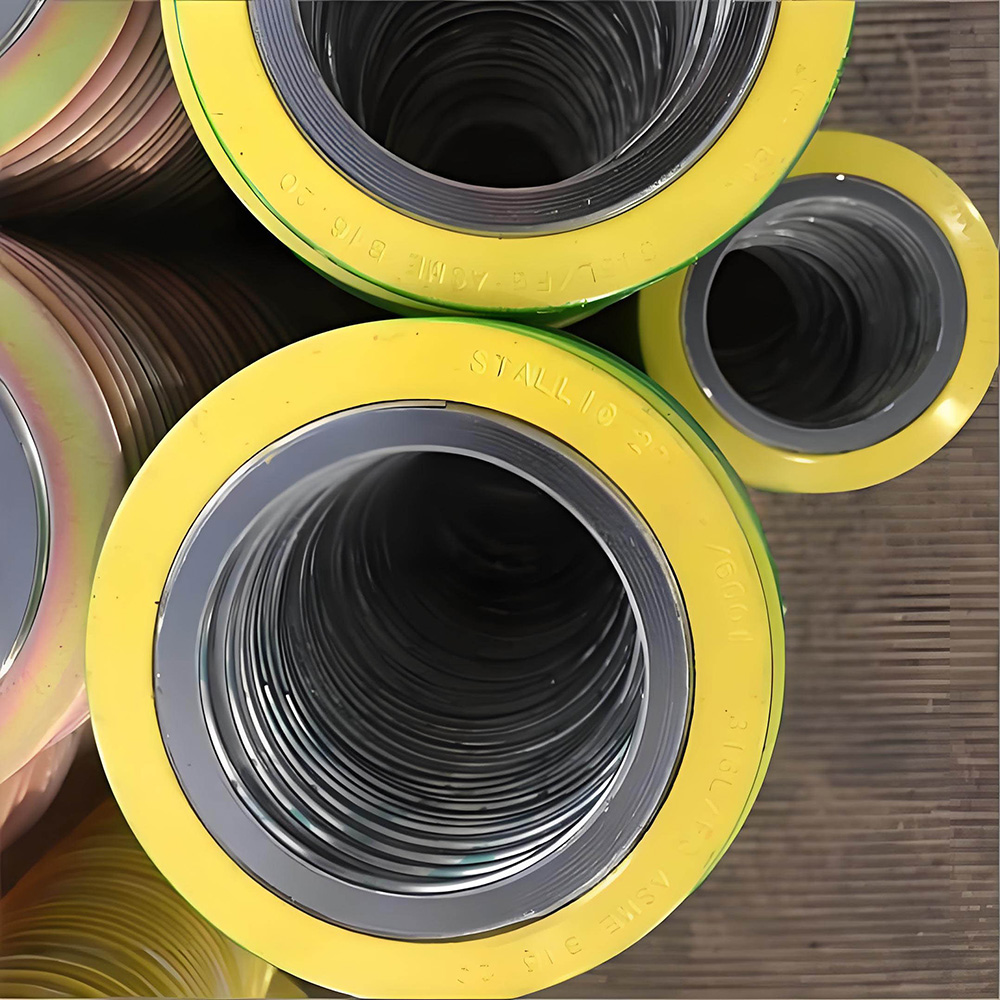
When procurement teams search for spiral wound gaskets, the first specification that must be quoted is ASME B16.20. It prescribes metallic winding materials, filler types, centering ring requirements, inner ring usage, and marking. For Inconel 625 spiral wound gaskets, compliance means the winding strip must be UNS N06625 or equivalent, with chemical composition per ASTM B443. The standard also dictates gasket dimensions to match ASME B16.5 flanges, compressive characteristics, and color coding—green stripe on the centering ring for Inconel 625 with PTFE filler, for instance. Without this framework, interchangeability vanishes and catastrophic blowouts increase.
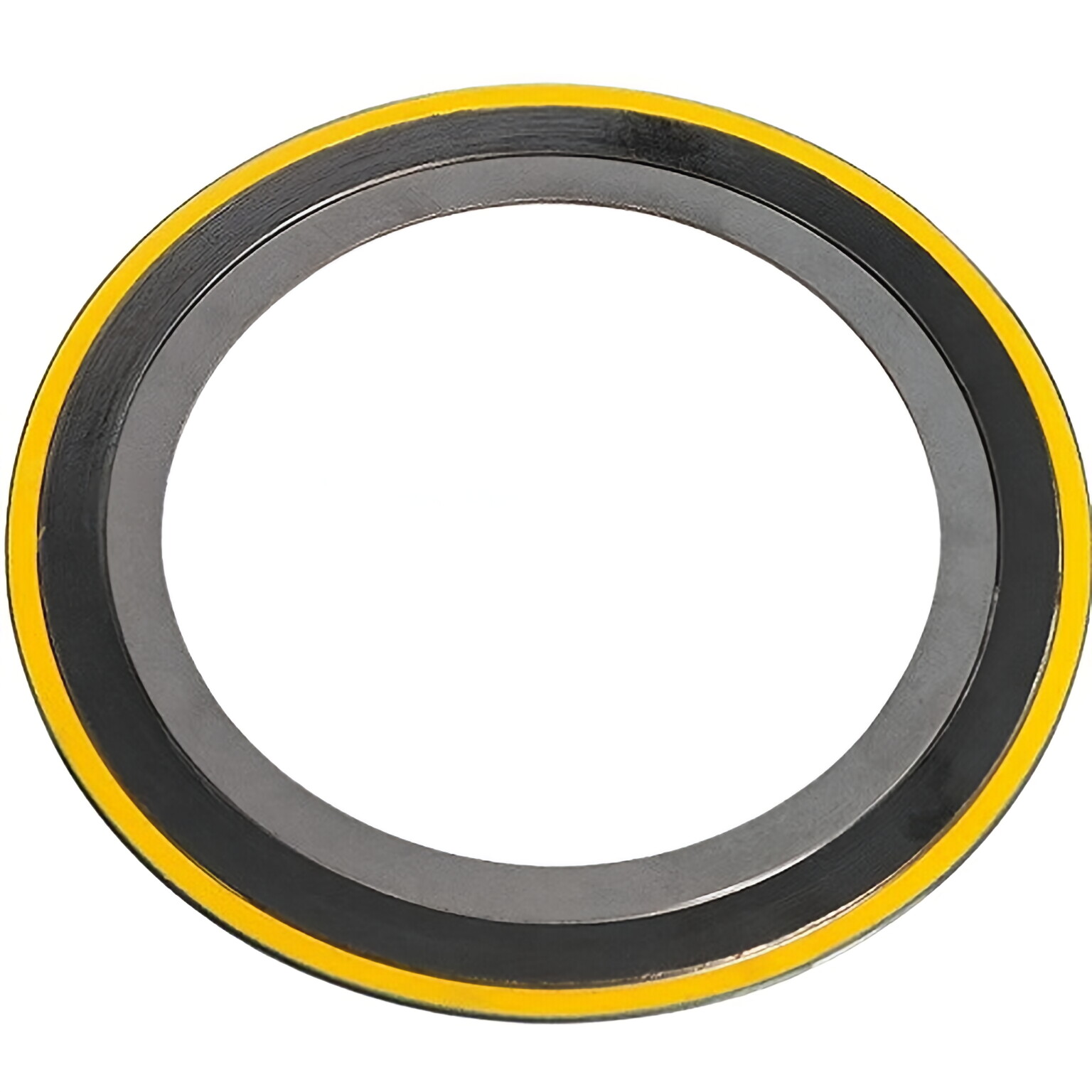
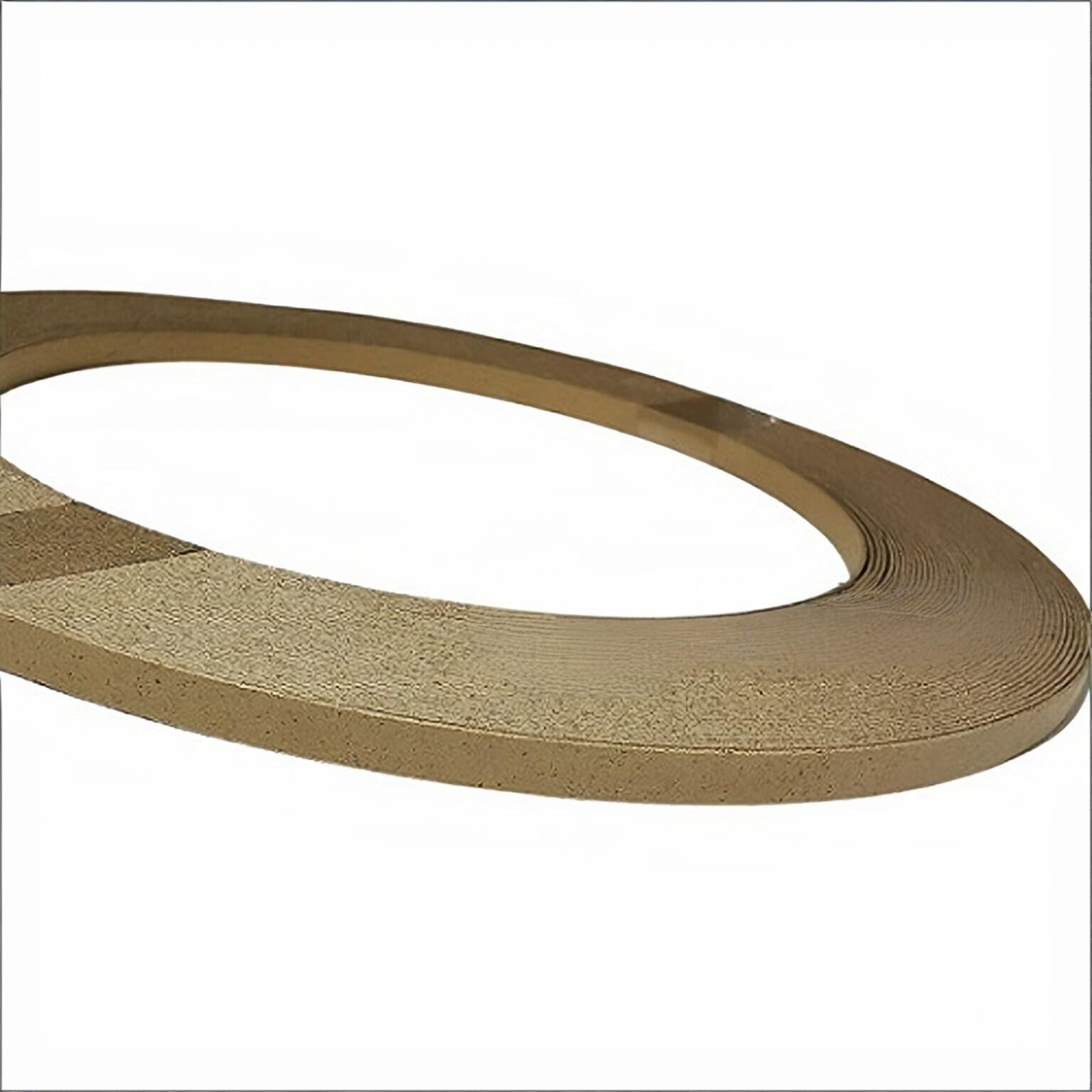
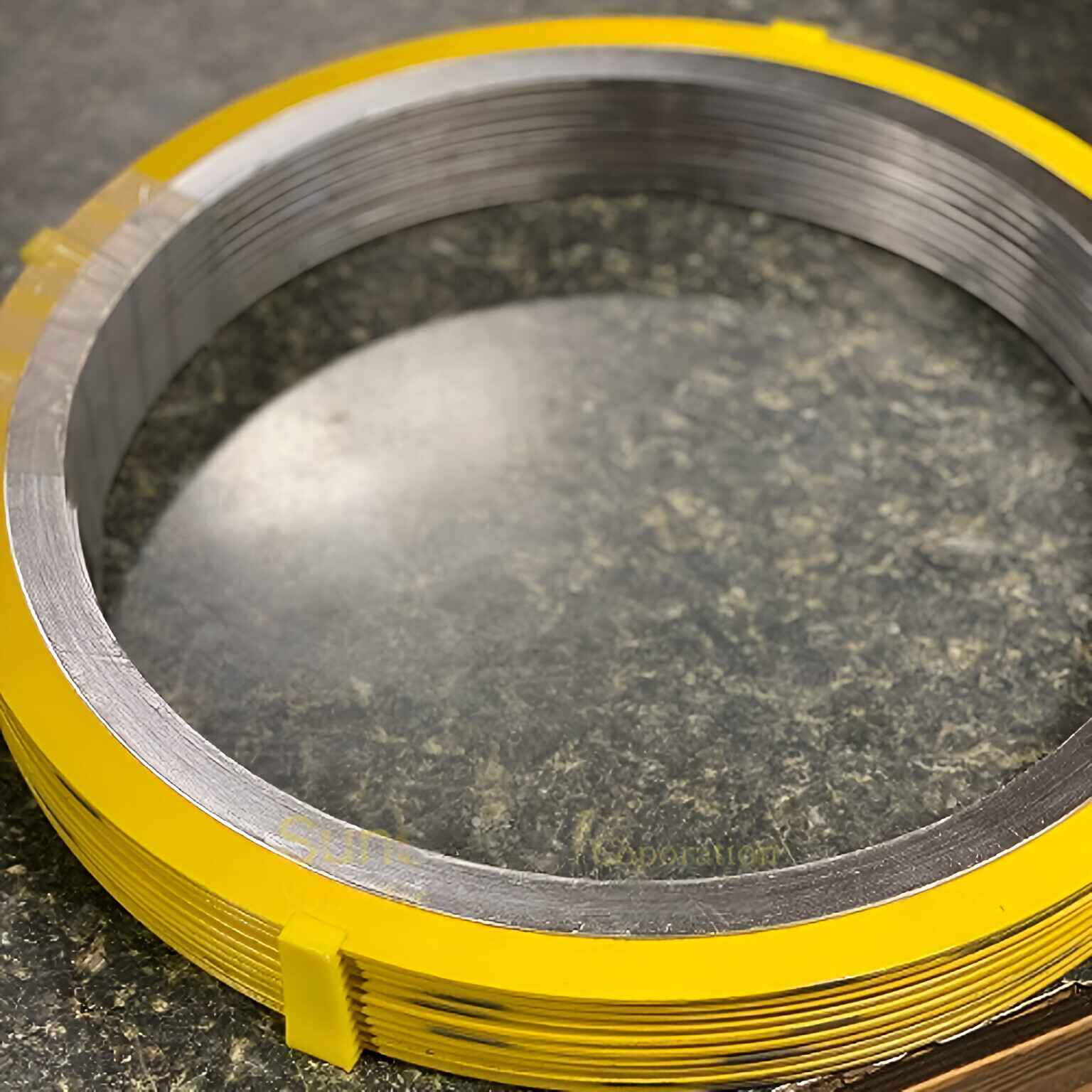
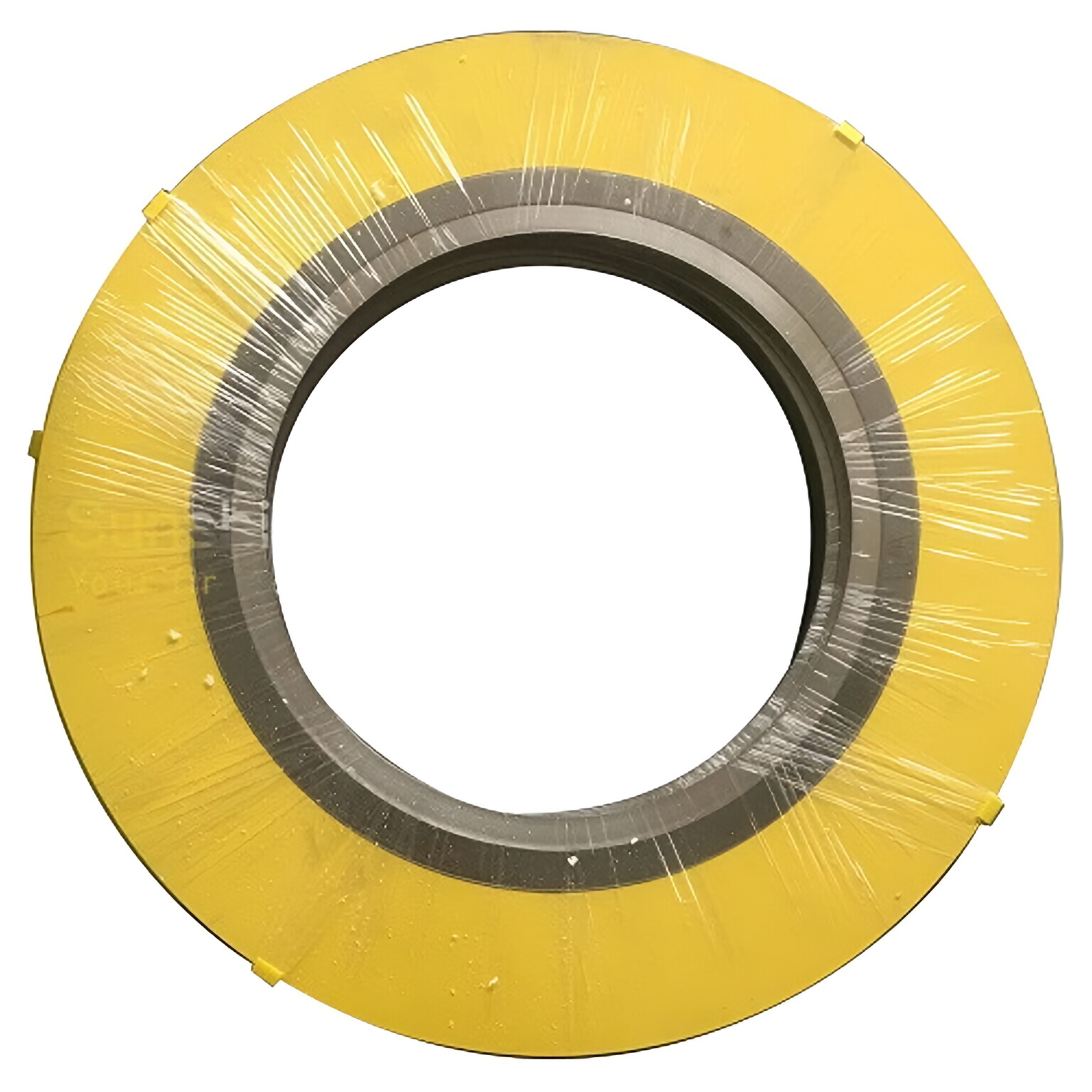
A frequent headache for engineers is receiving gaskets that carry the correct winding material but fail dimensional checks. The spiral wound portion thickness, centering ring OD, and inner ring fit must fall within Table 2 of ASME B16.20. At Ningbo Kaxite Sealing Materials Co., Ltd., each Inconel 625 gasket is laser-measured after compression tests, and we supply full dimensional reports upon request. The typical gasket structure is shown in the table below.
| Component | Material | Standard Reference |
|---|---|---|
| Winding Strip | Inconel 625 (UNS N06625) | ASTM B443, ASME B16.20 |
| Filler | Flexible Graphite or PTFE | ASME B16.20, API 601 |
| Outer Guide Ring | Carbon Steel or 304SS | ASTM A240, A36 |
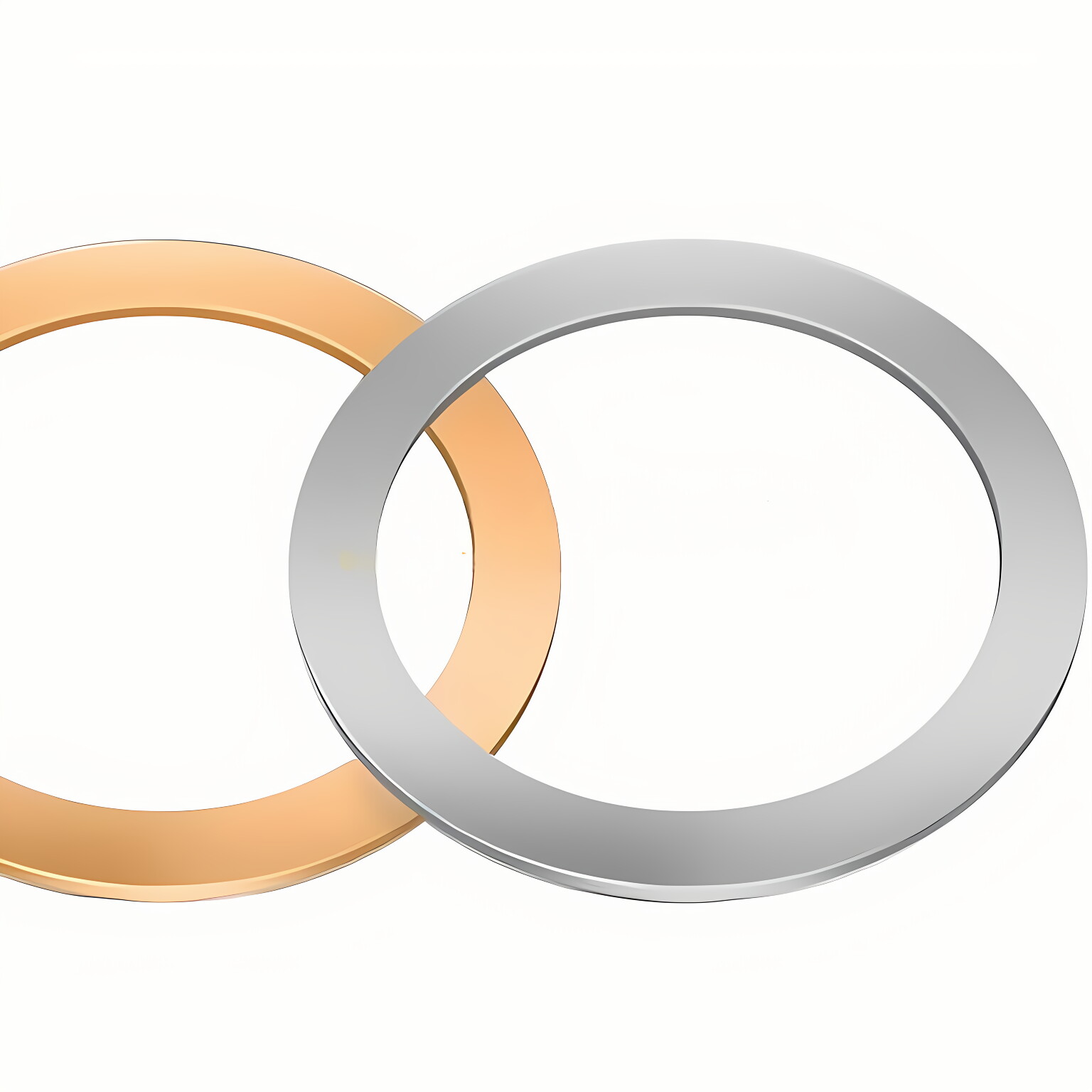
| Inner Ring (if required) | Inconel 625 or 304SS | ASME B16.20, B16.5 |
| Color Code (centering ring) | Green stripe on outer ring | ASME B16.20 Table 3 |
Inconel 625 brings a unique combination of high-temperature strength, outstanding fatigue resistance, and immunity to chloride stress corrosion cracking. In refineries, LNG plants, and chemical sectors where gaskets face thermal cycling and aggressive media, standard 304 or 316 winding strips often degrade. By contrast, Inconel 625 maintains its resilience and tightness well beyond 1000°F (538°C) under oxidizing and reducing environments. This is why ASME B16.20 categorizes it as a high-alloy winding material suitable for the most demanding Class 150 through 2500 flanges.
A maintenance manager recently shared his frustration: “We kept replacing graphite-filled 316 spiral wounds every turnaround because of crevice corrosion. Switching to Inconel 625 with the same filler, sourced through Ningbo Kaxite, eliminated the problem for three cycles and counting.” That kind of feedback reflects the material’s real-world ROI. The key mechanical properties that procurement should verify are outlined below.
| Property | Value | Significance for Gasket |
|---|---|---|
| Tensile Strength (min) | 120 ksi (827 MPa) | Resists crushing and blowout |
| Yield Strength (min) | 60 ksi (414 MPa) | Springback retention |
| Elongation | 30% | Conforms to flange imperfections |
| Max Service Temp | ≈1100°F (593°C) | Maintains seal at extreme heat |
| Corrosion Resistance | Excellent to pitting/crevice | Long service life in chlorides |
Imagine a procurement specialist finding the lowest-cost Inconel 625 spiral wound gasket. The supplier claims compliance, but no test certificates are provided. Months later, a gasket fails in a hydrogen service loop. The investigation reveals the winding strip was actually Inconel 825, misrepresented as 625, leading to embrittlement. The resultant downtime, emergency replacement, and damage claims far outstrip any initial saving. ASME B16.20 Paragraph 8 mandates that each gasket be permanently marked with manufacturer’s name, material designation, and size—yet counterfeit products often skip this step.
To shield buyers, we at Ningbo Kaxite Sealing Materials Co., Ltd. follow a dual-track quality protocol: positive material identification (PMI) on every Inconel 625 coil using X-ray fluorescence, and shipment-specific certifications with heat numbers traceable to the mill. This directly addresses the question: How can I be sure my Inconel 625 spiral wound gaskets meet ASME B16.20? Our answer is independent third-party witness testing upon request, plus a digital copy of the actual test report. No trade-offs between price and safety are needed.
Another common query from overseas buyers is: What standards apply to Inconel 625 spiral wound gaskets (ASME B16.20) when fire-safe certification is also required? In addition to B16.20, the gasket assembly must satisfy API 6FB or ISO 10497 fire-test requirements. Kaxite provides combined documentation, showing both ASME B16.20 conformance and fire-safe qualification, simplifying the procurement package.
Field technicians frequently encounter gaskets where the inner ring protrudes too far into the bore or the centering ring is off-spec, preventing proper fit. ASME B16.20 Tables 1 and 2 define exact ID, OD, and ring thicknesses based on NPS and pressure class. For a 6-inch, Class 600 Inconel 625 gasket with graphite filler and inner ring, the winding ID must be 6.109 in, winding OD 9.375 in, outer ring OD 10.75 in, and inner ring ID 5.935 in. Any deviation risks hammering distortion and leakage.
| Dimension | Requirement (inches) | Tolerance |
|---|---|---|
| Inner Ring ID | 5.935 | ±0.016 |
| Winding ID | 6.109 | ±0.031 |
| Winding OD | 9.375 | ±0.031 |
| Outer Ring OD | 10.75 | ±0.047 (Class 600) |
| Total Thickness | 0.175 (standard) | ±0.008 |
Marking is equally critical. Each Inconel 625 spiral wound gasket from our factory carries the Kaxite logo, material “INC625,” filler type, NPS and class, and the ASME B16.20 standard mark. This traceability helps installers avoid misidentification during shutdowns, where dozens of gasket types are handled simultaneously.
When you source Inconel 625 spiral wound gaskets, the partnership with a manufacturer who embeds B16.20 discipline into every batch is your strongest defense. At Ningbo Kaxite Sealing Materials Co., Ltd., we’ve reduced lead times for fully documented B16.20 Inconel 625 gaskets to just 10–15 working days in standard sizes. Our inventory of certified Inconel 625 strips, combined with in-house CNC forming and automated winding machines, ensures repeatable compression curves per ASME B16.20 Annex B recommendations.
We understand that sealing failures cost far more than components. That’s why our technical team reviews every enquiry—checking temperature, medium, and flange standard—and suggests the optimal inner ring configuration and filler. For example, if your process involves frequent thermal cycling above 900°F, we recommend segmented inner rings and pure graphite filler for maximum resilience, all within B16.20 guidelines. Real-world partnership means we stand by our gaskets with a no-quibble replacement policy if they are found non-conforming.
Still uncertain about your gasket specification? Contact our engineers for a free compliance review. We will verify your piping class and recommend the exact Inconel 625 spiral wound gasket that meets What standards apply to Inconel 625 spiral wound gaskets (ASME B16.20)? plus any additional project requirements.
For all your high-performance sealing needs, partner with Ningbo Kaxite Sealing Materials Co., Ltd., a specialist manufacturer with over two decades of focused experience in spiral wound gaskets. Our dedicated team delivers ASME B16.20-compliant Inconel 625 gaskets with full traceability and quick shipment. Reach our export department directly at [email protected] for a competitive quote or technical advice. We are ready to help you seal with confidence.
Smith, J. A., 2017, “Evaluation of High-Nickel Alloy Winding Strips in Spiral Wound Gaskets under Thermal Shock,” Journal of Pressure Vessel Technology, Vol. 139, No. 4.
Lee, C., & Park, H., 2018, “Comparative Sealing Performance of Inconel 625 and 316L Spiral Wound Gaskets,” International Journal of Pressure Vessels and Piping, Vol. 163, pp. 45-53.
Ali, M. R., 2019, “ASME B16.20 Compliance and Leak Rate Measurement for Metallic Gaskets,” Process Safety Progress, Vol. 38, No. 2.
Gonzalez, P., 2016, “Effect of Inner Ring Design on Spiral Wound Gasket Blowout Resistance,” ASME Symposium on Flange Joints, Houston, TX.
Chen, Y., et al., 2020, “Stress Relaxation Behavior of Inconel 625 Wound Gaskets at Elevated Temperatures,” Materials at High Temperatures, Vol. 37, No. 5, pp. 392-401.
Rahman, S., 2021, “Fire Testing of Graphite-Filled Spiral Wound Gaskets per API 6FB,” Journal of Loss Prevention in the Process Industries, Vol. 72, 104558.
Kumar, A., & Patel, R., 2015, “Optimizing Compression and Recovery of Inconel 625 Spiral Wounds for High-Pressure Steam,” Engineering Failure Analysis, Vol. 58, pp. 12-22.
Zhang, L., 2022, “PMI Verification of Nickel Alloy Gasket Materials in Critical Service,” Materials Testing, Vol. 64, No. 3, pp. 233-240.
Davies, M., 2014, “Mixed-Metal Crevice Corrosion in Offshore Flange Joints,” Corrosion Science, Vol. 86, pp. 81-88.
O’Connor, T., & Silva, F., 2019, “B16.20 Marking Integrity and Supply Chain Traceability,” NACE International Conference Proceedings, Paper 13422.