If you are sourcing industrial gaskets for flanged connections in oil and gas, chemical processing, or power generation, you have likely faced a common but costly question: What is the difference between kammprofile and spiral wound gaskets? Both are semi-metallic sealing solutions widely used in high-pressure, high-temperature applications, but they behave very differently under thermal cycling, flange rotation, and corrosive media. Choosing the wrong one can lead to unexpected shutdowns, fugitive emissions, and inventory waste. Procurement teams often ask for spiral wound gaskets by default, yet Kammprofile Gaskets frequently outperform spiral wound types in heat exchanger service and applications with frequent temperature swings. This guide breaks down the real differences, risks, and selection criteria so you can specify the right product without overpaying. You will also see how Ningbo Kaxite Sealing Materials Co., Ltd. helps global buyers avoid sealing failures through controlled manufacturing, material traceability, and application-specific support. Whether you are buying for a maintenance turnaround or a new equipment package, these distinctions directly affect leak rates, emission compliance, and gasket life. Keep reading to compare construction, performance under load, and total cost of ownership before your next purchase.
Article Guide:
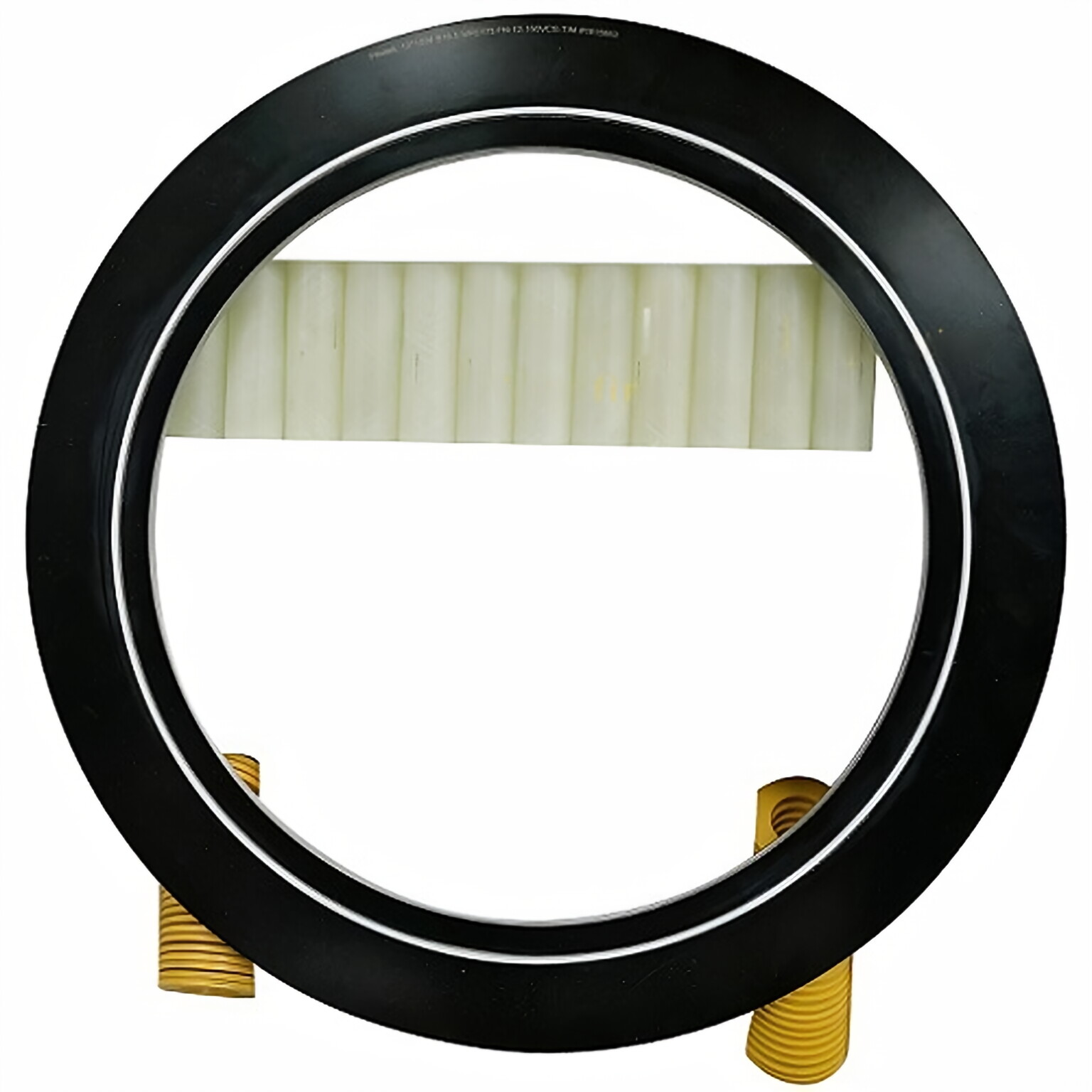
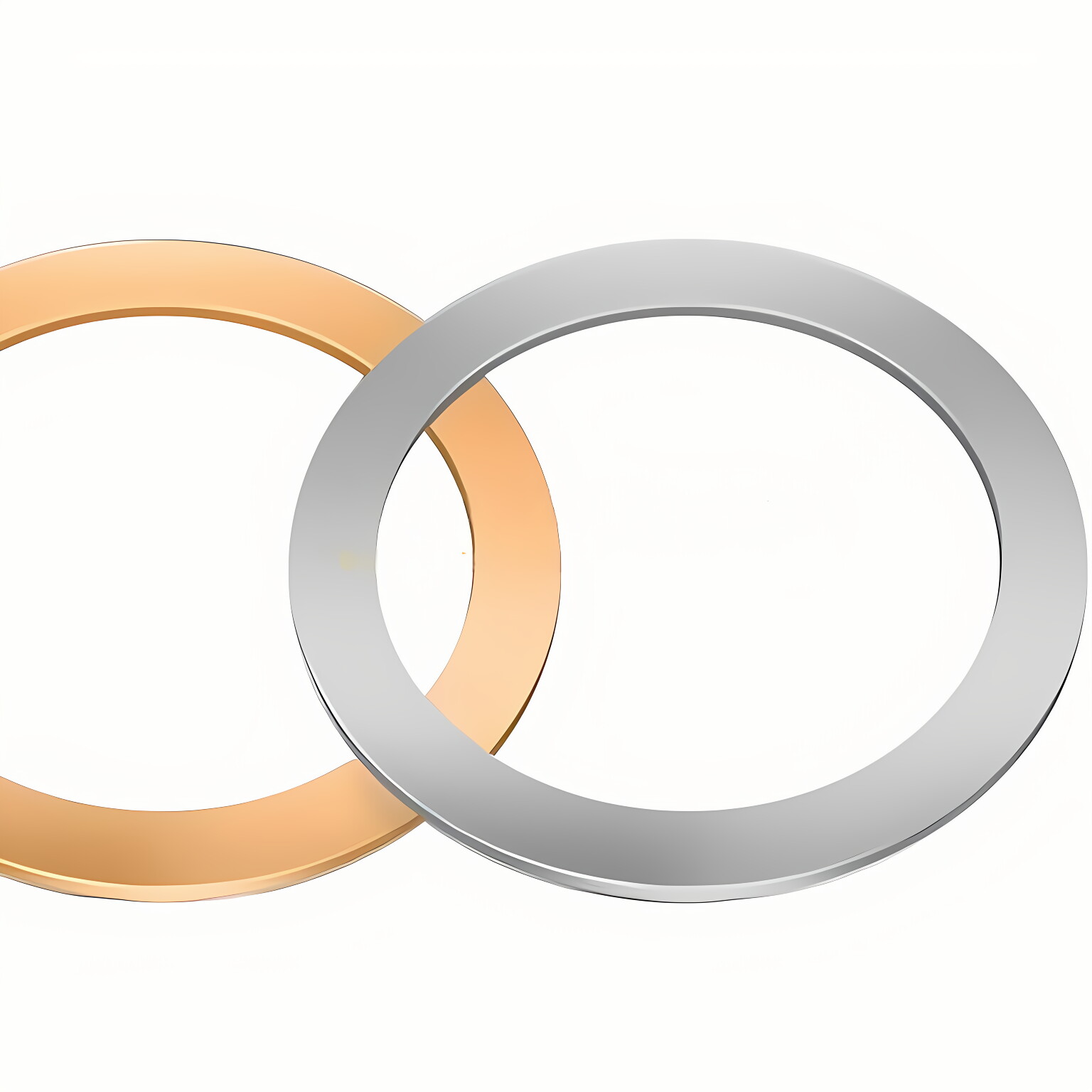
A kammprofile gasket, also called a serrated gasket, has a solid metal core, usually stainless steel or a higher alloy, with concentric serrations machined into both faces. A soft sealing layer, typically flexible graphite or PTFE, is pressed onto the serrated metal core. This design concentrates bolt load on the serration tips, creating high local seating stress while keeping the metal core mechanically stable. Unlike spiral wound gaskets, the kammprofile core cannot unwind or buckle because it is a continuous ring.
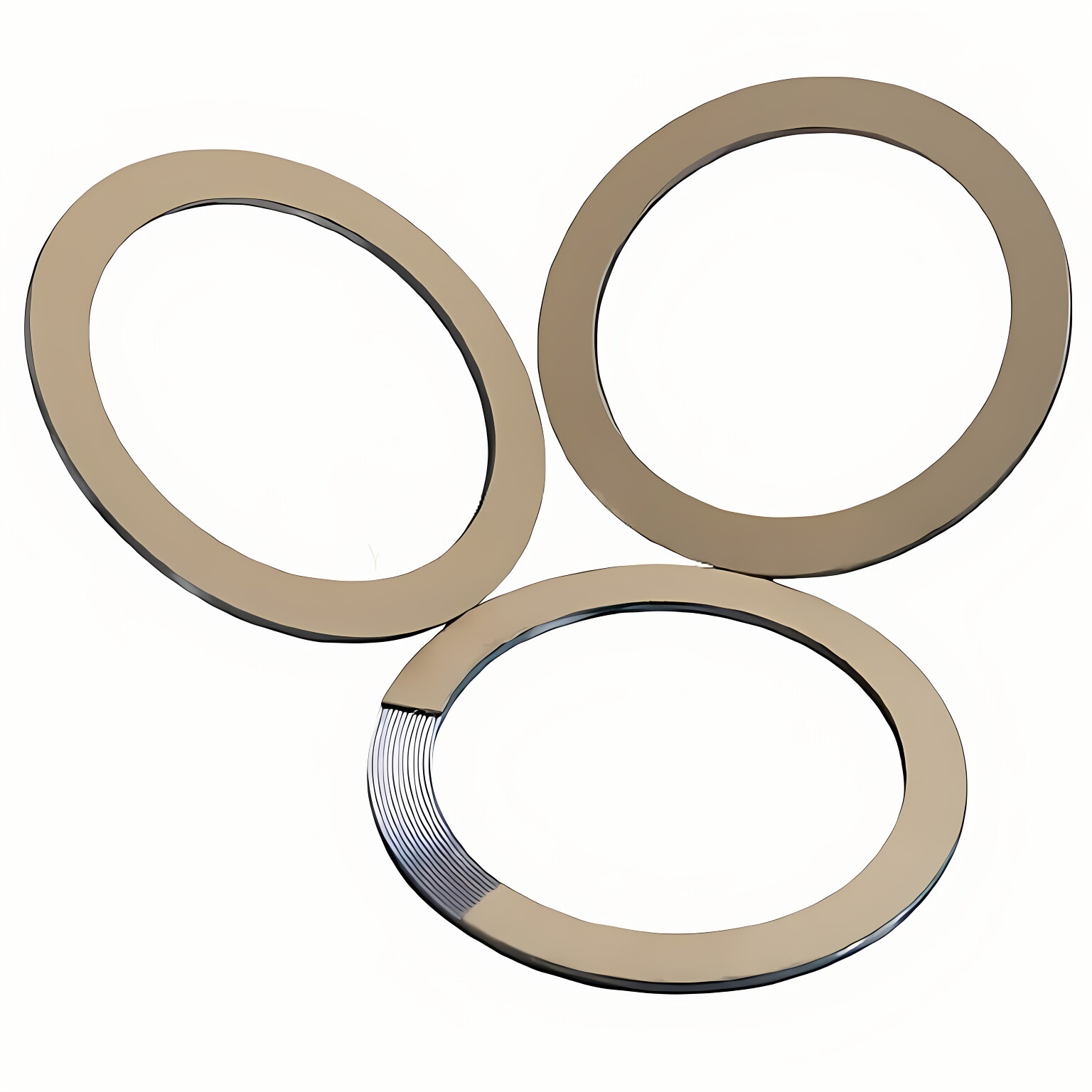
Pain point: Maintenance teams often report that spiral wound gaskets lose compression after repeated temperature cycles, especially on heat exchanger flanges. This leads to lower residual stress, increased emissions, and frequent hot retorquing. Kammprofile gaskets solve this by maintaining a resilient metal core and controlled sealing layer thickness, which reduces relaxation and improves leak tightness over time.
Solution: For flanges with low available bolt load, thermal cycling, or non-standard facing conditions, kammprofile gaskets deliver more reliable sealing than standard spiral wound gaskets.
| Specification | Typical Range |
|---|---|
| Core material | 316L, 304, 321, Monel, Inconel, titanium |
| Sealing layer | Flexible graphite, PTFE, mica |
| Temperature | -200°C to 550°C (graphite) |
| Pressure class | ASME 150 to 2500 |
| Common applications | Heat exchangers, reactor flanges, pipelines |
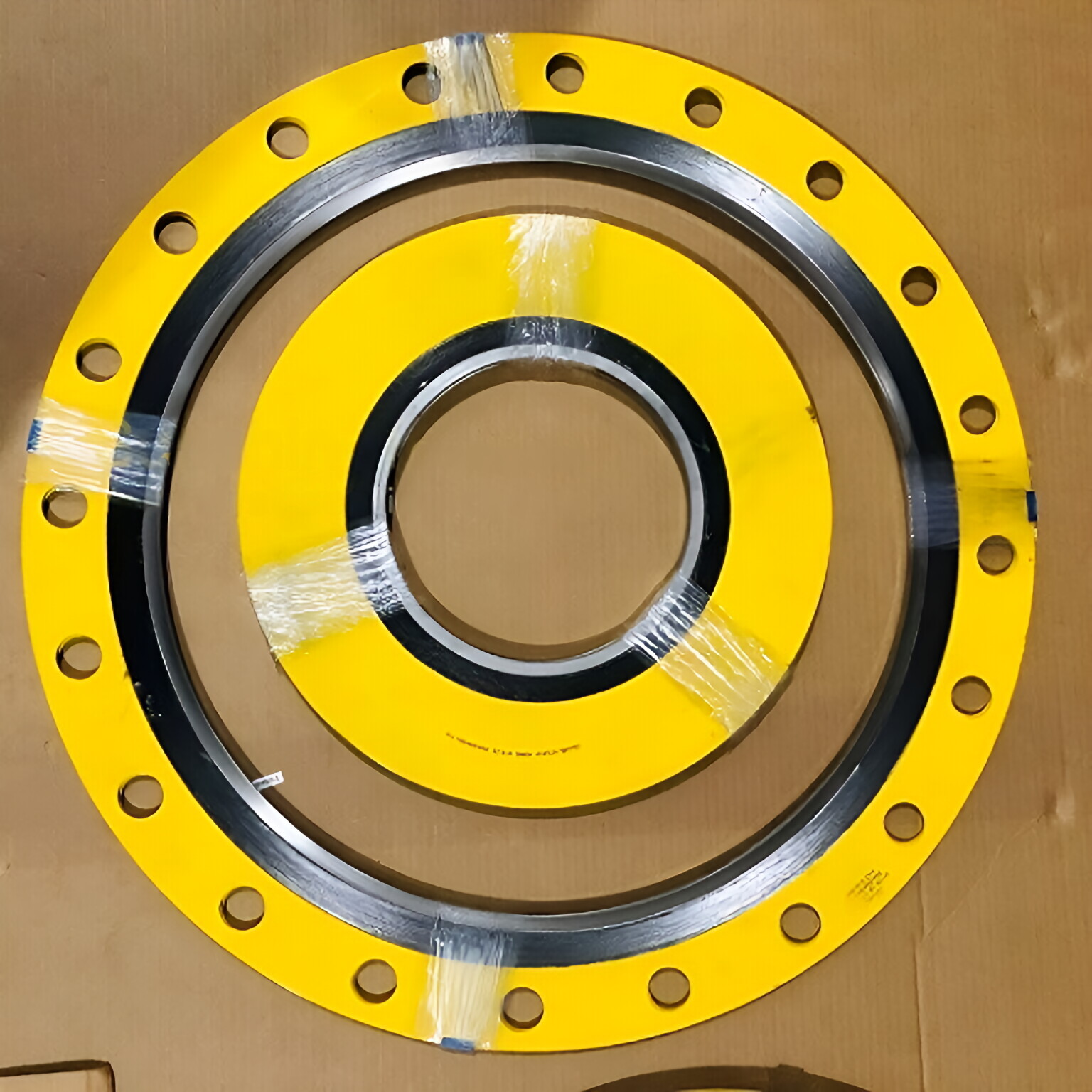
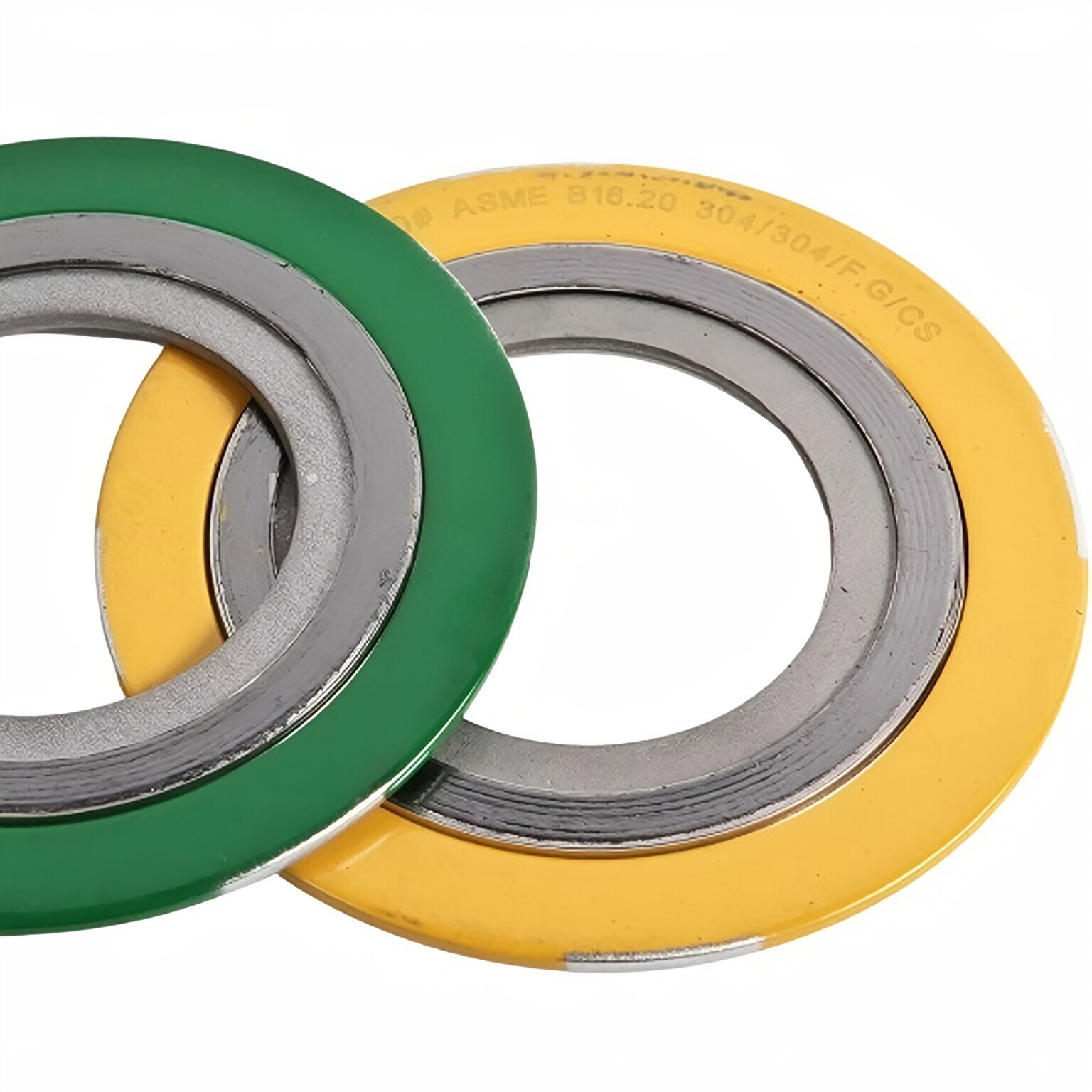
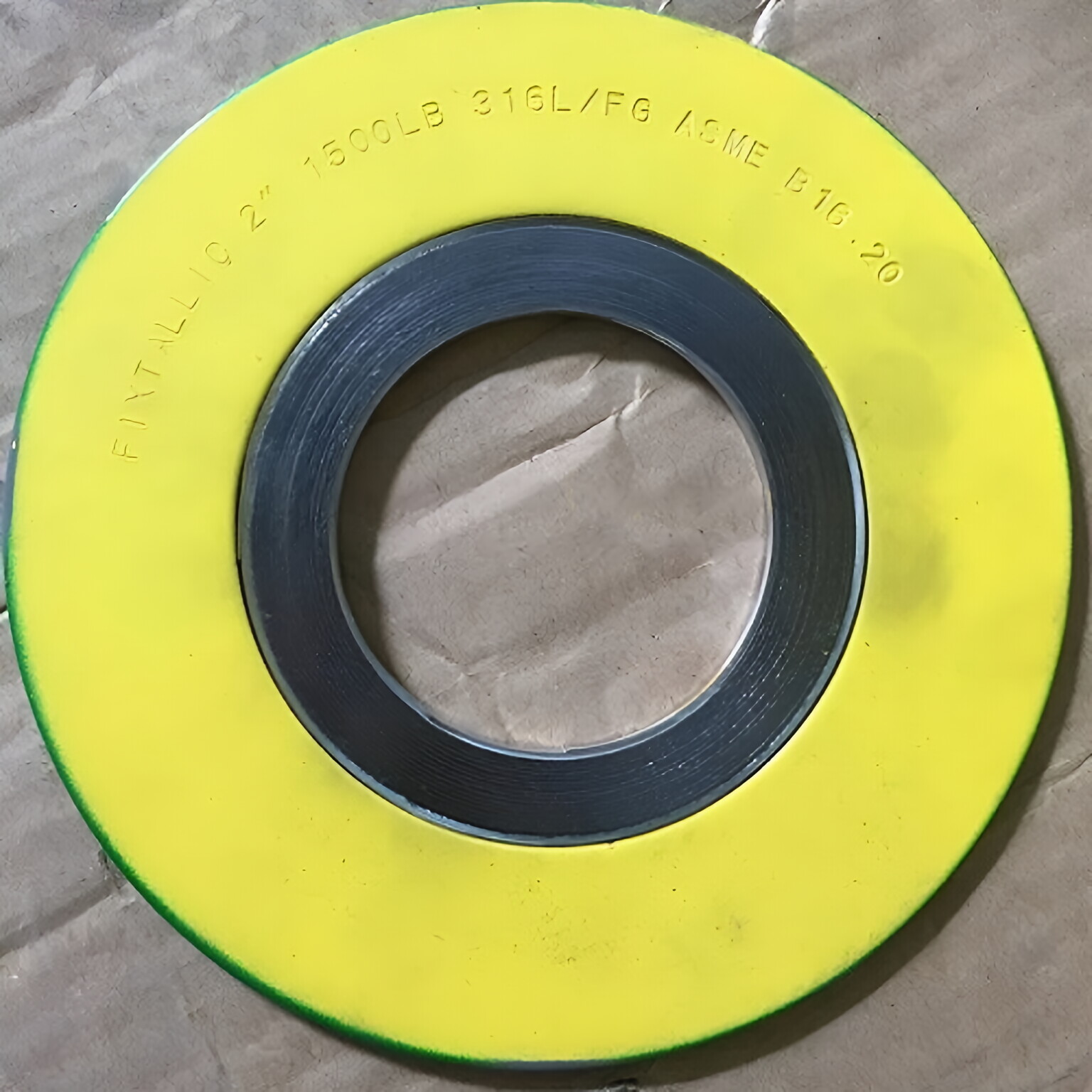
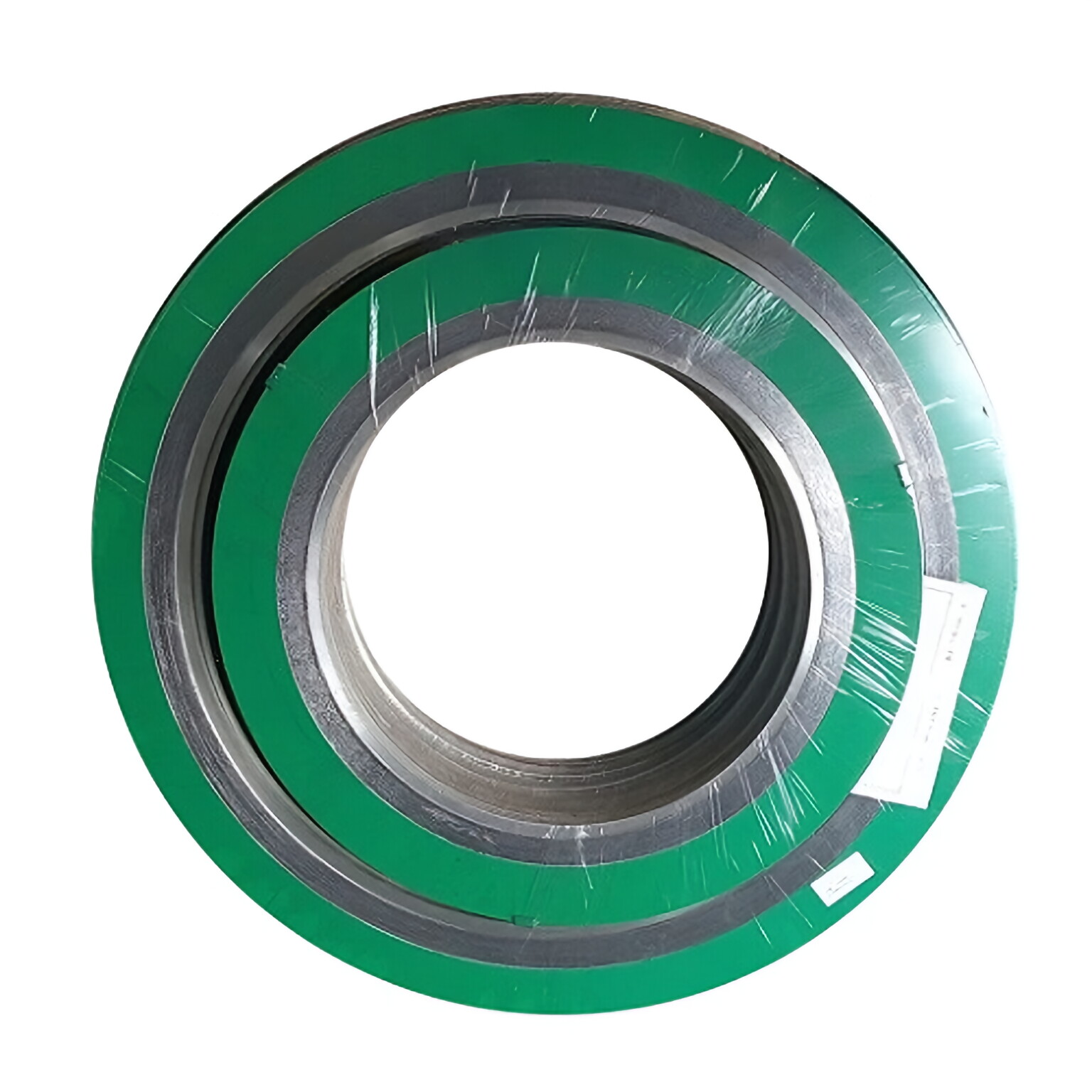
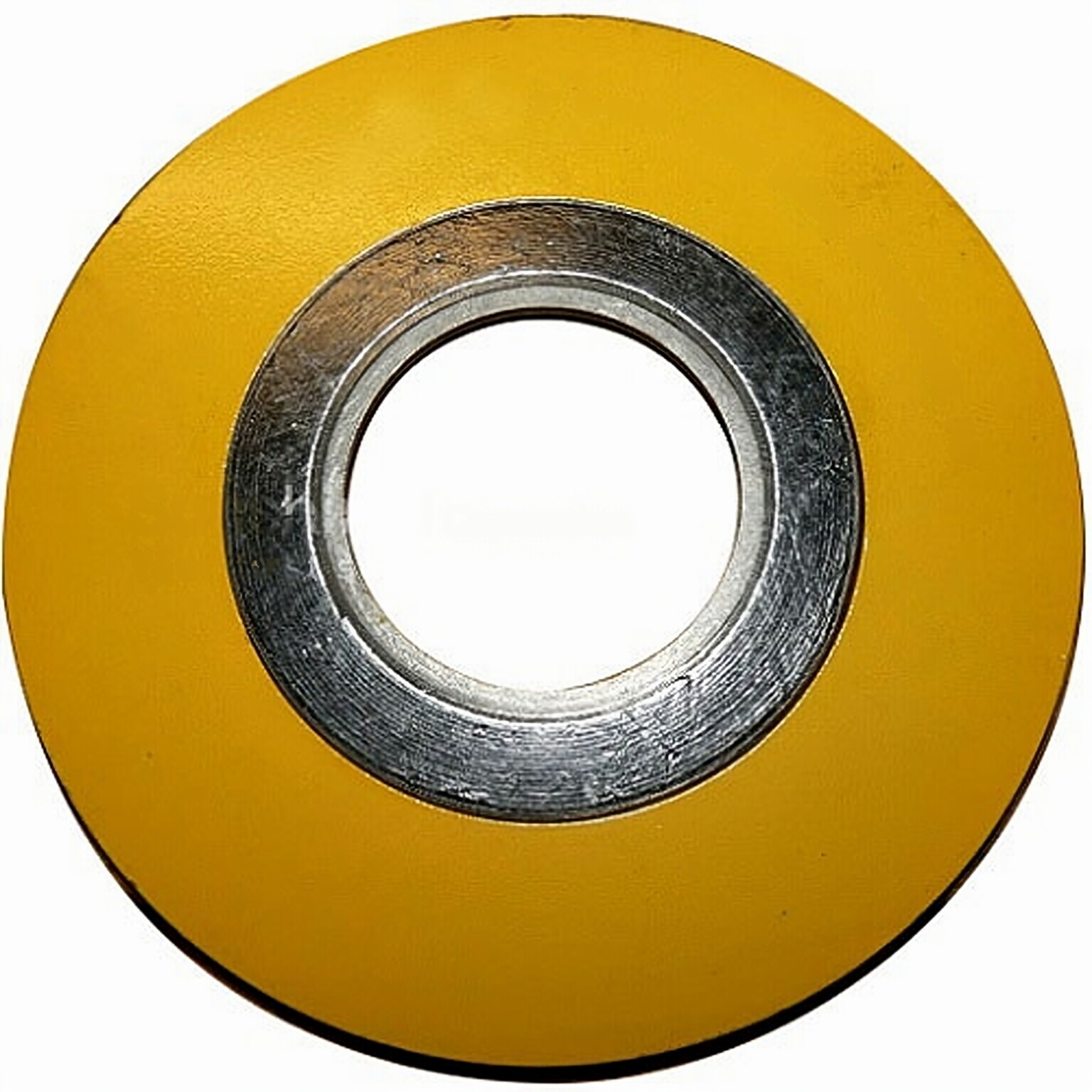
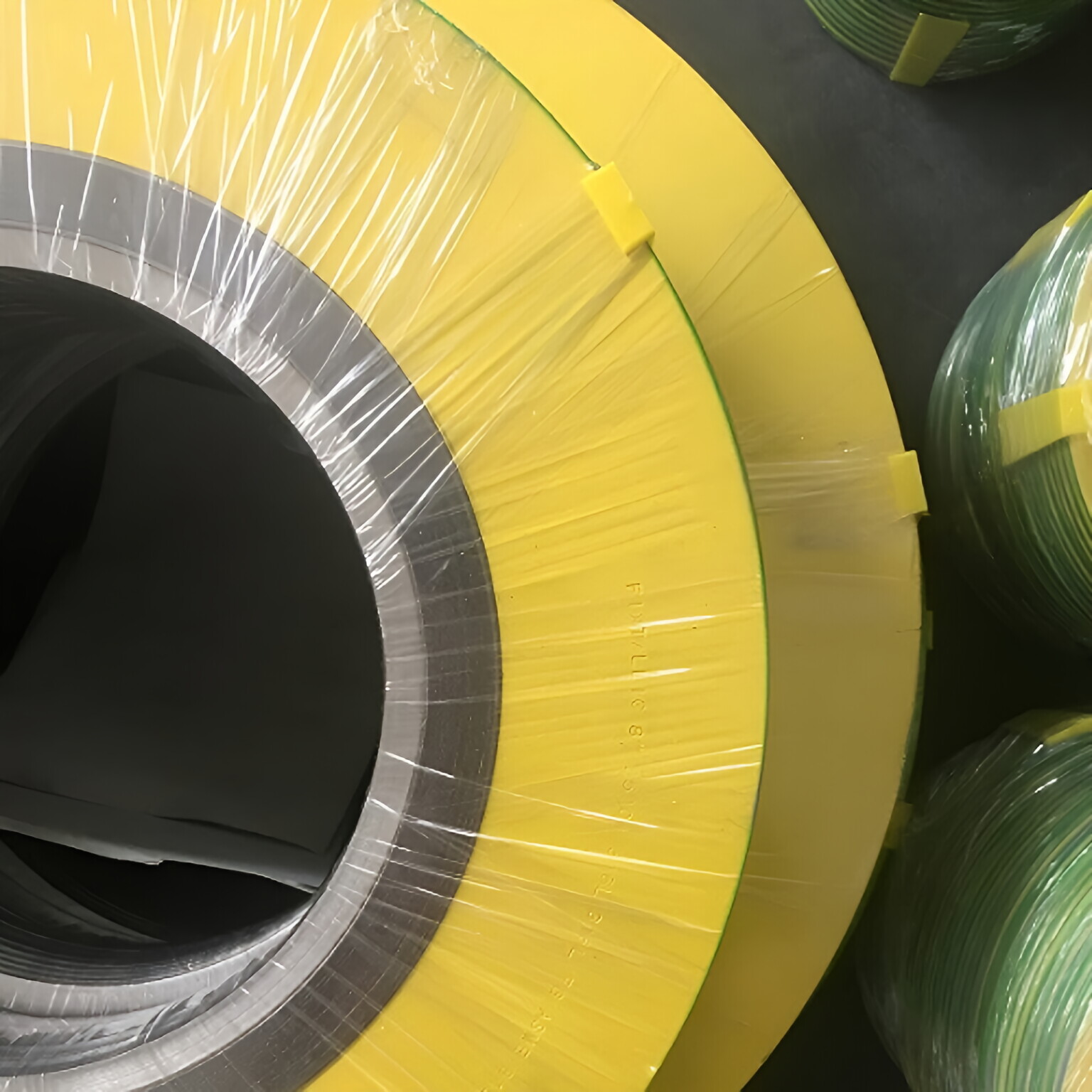
A spiral wound gasket is made by winding a V-shaped metal strip and a soft filler material, such as flexible graphite or PTFE, in alternating layers. The gasket often includes an outer ring for centering and an inner ring to prevent inward buckling and to protect the sealing element from media attack.
Pain point: Buyers frequently specify spiral wound gaskets because they are widely accepted in ASME B16.5 flanges and offer excellent chemical compatibility. However, in services with frequent thermal cycling or uneven flange loading, the wound component can relax or buckle, especially without an inner ring. This can cause internal leakage and fugitive emissions.
Solution: When you have standard raised-face flanges, sufficient bolt load, and a steady operating temperature, spiral wound gaskets remain a cost-effective default. Adding an inner ring improves stability and prevents over-compression. For critical cycling services, compare the kammprofile alternative before committing.
| Specification | Typical Range |
|---|---|
| Metal winding | 316L, 304, 321, Monel, Inconel, Hastelloy |
| Filler material | Flexible graphite, PTFE, ceramic fiber |
| Temperature | -200°C to 500°C (graphite) |
| Pressure class | ASME 150 to 2500 |
| Common applications | Standard pipe flanges, valves, pumps |
Pain point scenario: A procurement engineer approves a spiral wound gasket for a heat exchanger because the previous specification called for it. Three months later, the unit leaks during a temperature ramp and requires emergency shutdown. The plant manager asks: why did this happen and how do we prevent a repeat? The difference lies in how each gasket transfers and retains sealing stress.
Solution: Kammprofile gaskets use a solid serrated core that does not relax as much as wound components. Spiral wound gaskets depend on a precision-wound geometry and controlled compression. When bolt load is limited or flanges rotate slightly, kammprofile gaskets maintain seal integrity better. However, spiral wound gaskets can be more economical for stable, standard services.
| Parameter | Kammprofile Gasket | Spiral Wound Gasket |
|---|---|---|
| Core construction | Solid metal serrated ring | V-shaped metal strip wound with filler |
| Blowout resistance | Excellent, no unwinding | Good with inner ring; lower without |
| Thermal cycling resistance | Superior | Moderate |
| Bolt load required | Lower | Higher |
| Reusability | Limited after compression | Generally not reusable |
| Relative cost | Moderate to high | Low to moderate |
| Typical flange type | Heat exchangers, non-standard flanges | ASME B16.5 pipe flanges |
Scenario 1: A chemical plant uses spiral wound gaskets without inner rings on a reactor top head. After a process upset, the filler extrudes and the winding collapses inward, causing a visible leak. The maintenance team replaces them with inner-ring spiral wound gaskets but still notices relaxation after repeated steam-out cycles. The final fix is to switch to kammprofile gaskets with a flexible graphite layer, which prevents inward collapse and maintains sealing stress under thermal movement.
Scenario 2: An overseas procurement buyer receives complaints from the field that standard spiral wound gaskets are difficult to install correctly on a non-standard flange with limited bolt load. The supplier recommends kammprofile gaskets because the solid core requires less load to seat and tolerates minor flange irregularities. After the change, leak tests pass on the first attempt and warranty claims drop.
These real-world shifts are exactly why Ningbo Kaxite Sealing Materials Co., Ltd. asks detailed application questions before quoting. The right gasket reduces total cost even if the unit price is slightly higher.
Use this table as a first-pass reference when you receive an RFQ or need to challenge a legacy specification.
| Application Condition | Preferred Gasket | Reason |
|---|---|---|
| Standard ASME B16.5 pipe flange, steady temperature | Spiral wound with inner ring | Cost-effective and widely available |
| Heat exchanger with frequent thermal cycles | Kammprofile | Better stress retention and blowout resistance |
| Low bolt load or fragile flange | Kammprofile | Requires lower seating stress |
| High vibration compressor piping | Kammprofile or spiral wound with inner ring | Depends on temperature range |
| Corrosive media with inner ring required | Spiral wound with PTFE filler | Chemical compatibility and centering |
| High temperature reactor closure | Kammprofile with graphite | No filler extrusion and low relaxation |
Q: What is the difference between kammprofile and spiral wound gaskets in high-temperature cycling service?
A: In high-temperature cycling service, kammprofile gaskets generally retain sealing stress better because the solid serrated core does not unwind or relax as much as the V-shaped metal winding in a spiral wound gasket. Spiral wound gaskets can lose compression after repeated expansion and contraction, which may require re-torquing. If your flanges see frequent temperature swings, kammprofile is usually the safer choice.
Q: What is the difference between kammprofile and spiral wound gaskets when bolt load is limited?
A: With limited bolt load, kammprofile gaskets require lower seating stress to achieve a tight seal because the serrations concentrate compression on a smaller contact area. Spiral wound gaskets need higher bolt load to seat the winding correctly. Without sufficient load, spiral wound gaskets may leak or fail to reach the required gasket stress. This makes kammprofile better for older, corroded, or non-standard flanges.
Choosing between kammprofile and spiral wound gaskets is not just a material decision—it is a risk-reduction decision. Ningbo Kaxite Sealing Materials Co., Ltd. supplies both gasket types with full material traceability, dimensional accuracy, and application-specific engineering support. Instead of simply taking an order, the team reviews your flange type, media, temperature range, and bolt load to confirm which style matches the operating reality. This prevents over-specification and helps you control long-term maintenance costs. With fast lead times and export-focused documentation, the company supports procurement teams in more than 30 countries.
Need a fast, reliable recommendation? Ningbo Kaxite Sealing Materials Co., Ltd. manufactures kammprofile gaskets, spiral wound gaskets, and custom sealing solutions for demanding industrial applications. Visit https://www.spiral-wound-gasket.com to view the full product range, or email [email protected] with your flange drawings and operating conditions. Tell us your temperature, pressure, media, and flange standard, and we will recommend the right gasket type—kammprofile or spiral wound—with clear reasons based on field performance and cost analysis.
Bickford, J. H., 1998, "Gaskets and Gasketed Joints", ASME Pressure Vessels and Piping Conference, PVP-Vol. 367.
Brown, W., & Marchand, L., 2015, "Comparison of Bolted Joint Behavior with Kammprofile and Spiral Wound Gaskets", Journal of Pressure Vessel Technology, 137(3), 031203.
Payne, J. R., 2010, "Spiral Wound Gasket Performance in High Temperature Service", Sealing Technology, 2010(8), 9–12.
Derenne, M., & Marchand, L., 2007, "Leak Tightness of Kammprofile Gaskets Under Thermal Cycling", WRC Bulletin, 519.
Kobayashi, K., 2012, "Effect of Inner Ring on Spiral Wound Gasket Sealing Performance", ASME PVP2012-78074, Pressure Vessels and Piping Division Conference.
Zheng, X., Li, Y., & Chen, H., 2019, "Comparative Study of Kammprofile and Spiral Wound Gaskets for Flanged Joints in Petrochemical Plants", Engineering Failure Analysis, 104, 1022–1034.
Aljuboury, M., Razaq, R., & Alsalman, A., 2018, "Mechanical Properties of Flexible Graphite Filled Spiral Wound Gaskets", Materials Today: Proceedings, 5(5), 1234–1241.
Brown, W., 2004, "Sealing Performance of Gasketed Bolted Flanged Joints: A Review", International Journal of Pressure Vessels and Piping, 81(8), 781–793.
Reid, J. A., & Melrose, G., 2016, "Kammprofile Gasket Stress Distribution Under Bolt Load", Proceedings of the Institution of Mechanical Engineers, Part E: Journal of Process Mechanical Engineering, 230(2), 95–102.
Zhao, Y., Wang, J., & Sun, L., 2021, "Comparative Leak Rate Analysis of Serrated Metal Gaskets and Spiral Wound Gaskets at Elevated Temperatures", Journal of Loss Prevention in the Process Industries, 72, 104568.
-