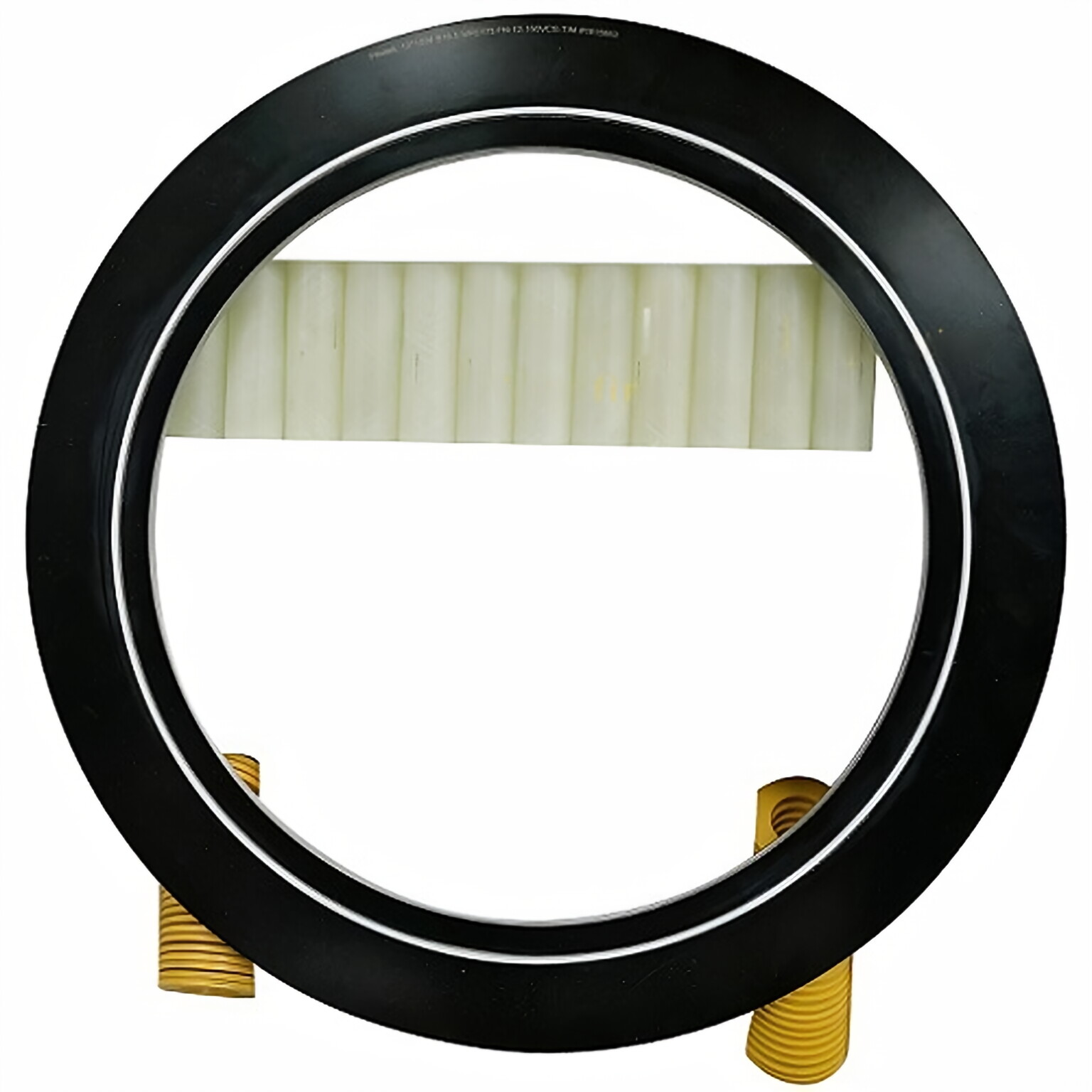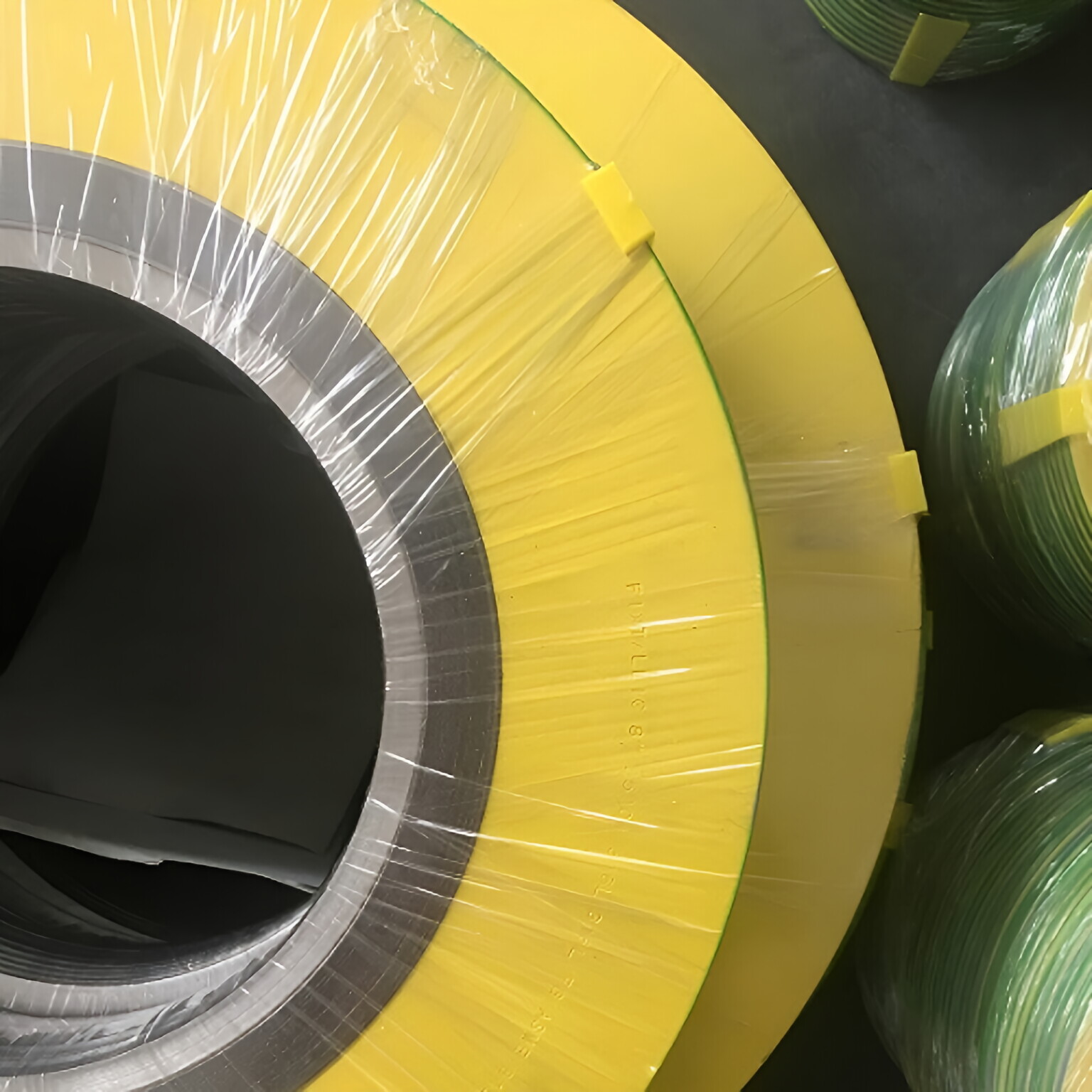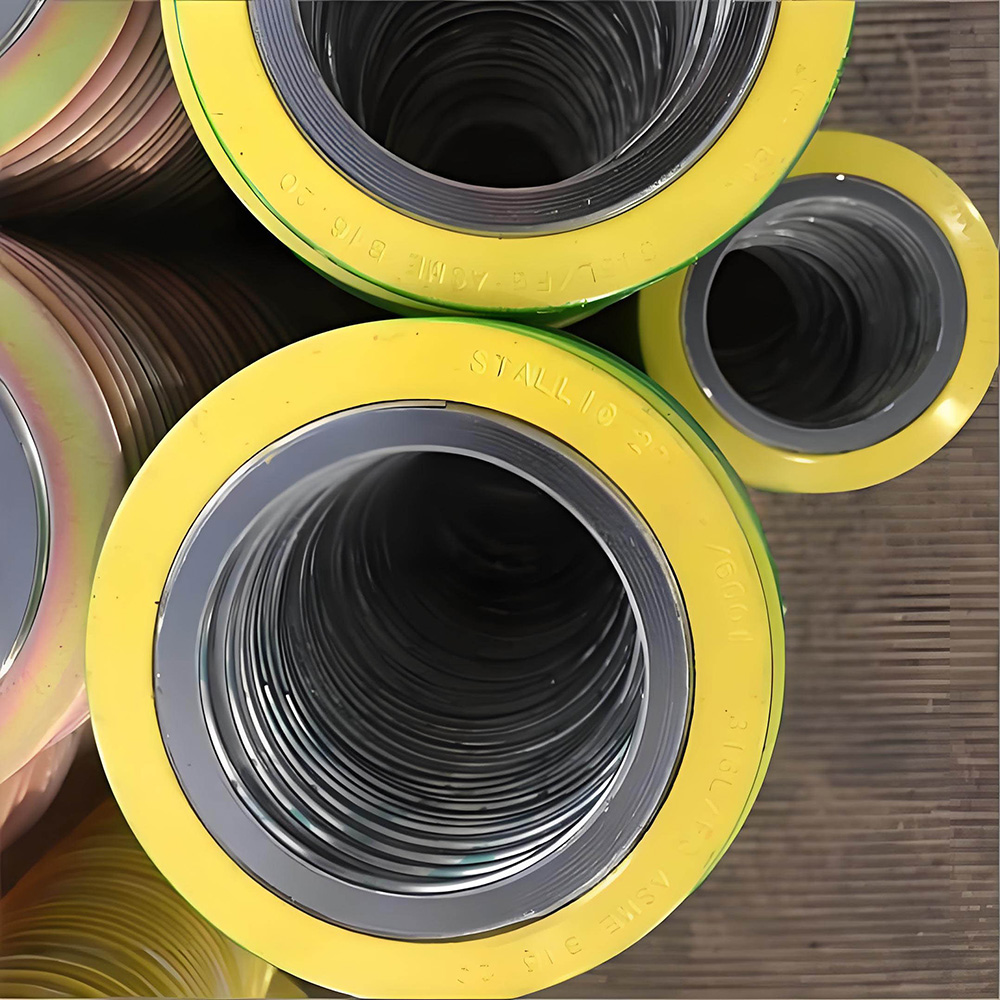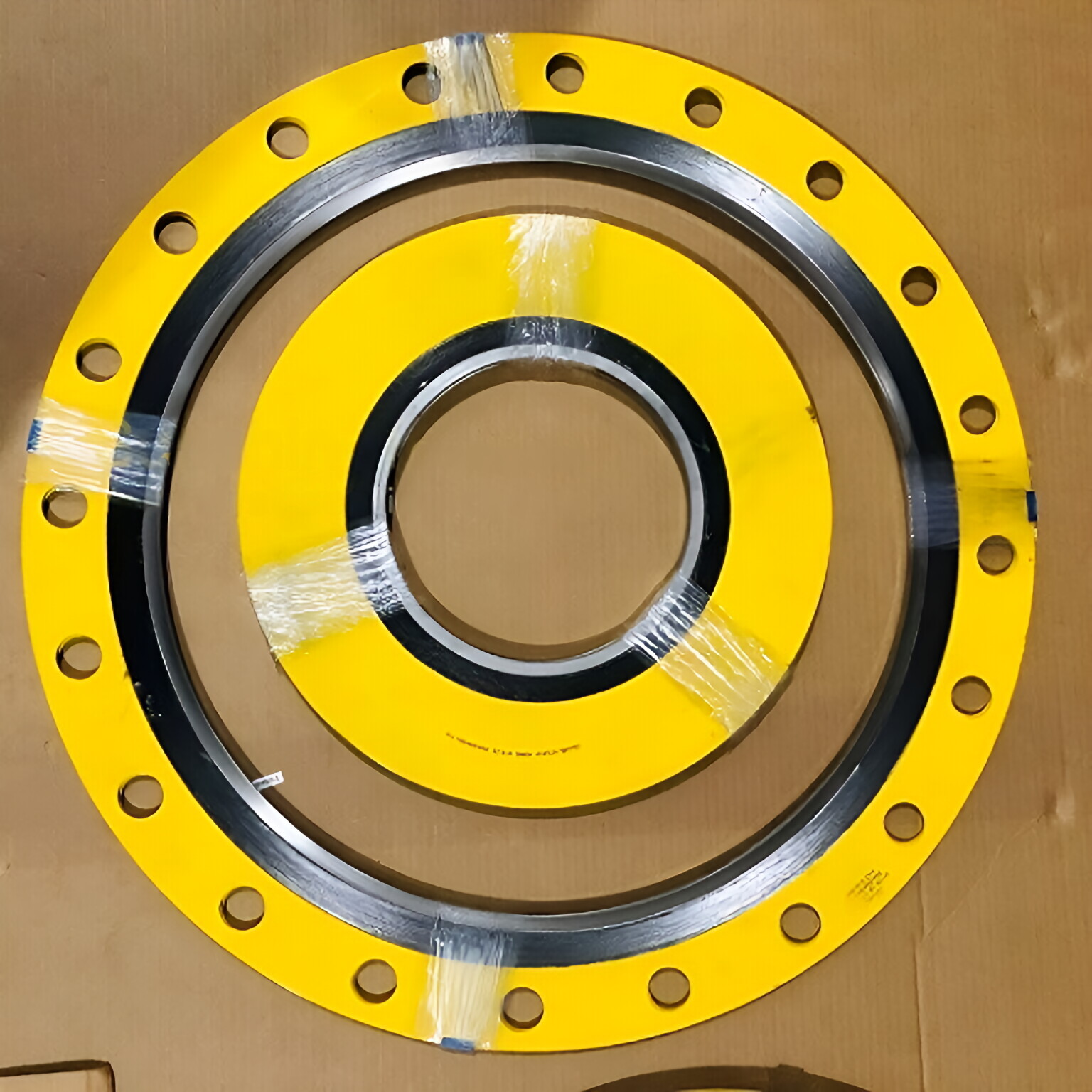
How Long Do Rubber-steel Flange Gaskets Typically Last? This is a critical question for every procurement professional and maintenance engineer. A failing gasket is more than a simple part replacement; it's a potential cascade into costly downtime, safety hazards, and production losses. The typical lifespan of rubber-steel flange gaskets is not a fixed number. It's a variable dictated by the harsh interplay of your specific application's pressure, temperature, chemical exposure, and installation quality. Understanding these factors is the key to maximizing performance, ensuring safety, and controlling operational budgets. This guide will provide clear, actionable insights to help you specify the right gasket and predict its service life with greater confidence.
Imagine a critical process line in a chemical plant scheduled for a routine shutdown. The maintenance team replaces a flange gasket, but six months later, a small leak is detected. This isn't just a drip; it's a sign of premature failure that forces an unscheduled, emergency shutdown. The costs skyrocket: lost production, overtime labor, environmental fines, and potential safety incidents. This scenario is all too common when gasket lifespan is underestimated. The solution lies in a deep understanding of material science and application engineering. A high-quality rubber-steel gasket, like those engineered by Ningbo Kaxite Sealing Materials Co., Ltd., is designed to withstand these challenges, transforming a potential crisis into a story of reliable, long-term performance.
| Service Condition | Pressure Range | Temperature Range | Expected Lifespan Range |
|---|---|---|---|
| Moderate (Water, Air) | Up to 150 PSI | -20°C to 80°C | 3-7+ Years |
| Severe (Chemicals, Steam) | 150-300 PSI | 80°C to 150°C | 1-4 Years |
| Critical (Abrasive, High Cyclic) | 300+ PSI | 150°C+ | 6 Months - 2 Years |
Procurement specialists often face the dilemma of balancing cost with longevity. The lifespan of a rubber-steel gasket is not random; it's a calculated outcome influenced by four primary pillars. First, the chemical compatibility of the rubber compound with the process media is non-negotiable; swelling or degradation is a fast track to failure. Second, continuous operating temperature directly affects the rubber's elasticity and compression set. Third, system pressure and pressure cycles create mechanical stress that can fatigue the metal skeleton. Finally, and crucially, the quality of flange surface finish and bolt torque during installation sets the stage for success or immediate compromise. Addressing these factors holistically is where expertise matters.
| Factor | Optimal Condition | Risk if Sub-Optimal | Kaxite's Solution Focus |
|---|---|---|---|
| Chemical Exposure | Full compatibility | Rapid deterioration, leaks | Custom compound formulation |
| Temperature | Within rated range | Hardening, loss of seal | High-temp stable elastomers |
| Pressure / Pulsation | Stable, within rating | Metal fatigue, blow-out | Reinforced steel core design |
| Installation (Surface, Torque) | Clean, flat surface; even torque | Uneven compression, leakage from day one | Providing detailed installation guides |
The scene: a plant manager walks past a flange and notices a faint, unusual odor or a minor discoloration on the insulation. These subtle signs are often the first indicators of gasket distress, long before a major leak occurs. Waiting for a visible drip is a reactive and costly strategy. Proactive maintenance relies on recognizing early failure modes: weeping (slow seepage), compression set (the gasket doesn't spring back), or fretting (wear at the metal edges). Implementing a regular inspection protocol for these signs can schedule replacements during planned outages, avoiding the chaos of emergency repairs. Partnering with a supplier who understands these failure modes, like Ningbo Kaxite Sealing Materials Co., Ltd., means you get products engineered for resilience and clarity in maintenance guidance.
| Stage | Visual/Physical Signs | Recommended Action |
|---|---|---|
| Early Warning | Minor surface oxidation on metal ring, slight rubber gloss loss | Document and monitor; plan for next outage. |
| Progressive Wear | Visible compression set, start of minor weepage | Schedule replacement at earliest convenience. |
| Imminent Failure | Visible leak, significant rubber degradation, metal ring distortion | Immediate shutdown and replacement required. |
For a procurement officer, the goal is to achieve the lowest total cost of ownership, not just the lowest purchase price. Extending gasket life is a systematic process that starts before the gasket even arrives on site. It begins with precise specification: selecting the exact rubber-steel combination for the service conditions. It continues with proper storage—keeping gaskets in a cool, dry place away from UV light and ozone. The most critical phase is installation: ensuring flange faces are clean, parallel, and undamaged, and following a cross-pattern bolt tightening sequence to the specified torque. Finally, consistent monitoring rounds out the strategy. Suppliers who provide comprehensive support across this entire lifecycle, from material selection to installation training, deliver far greater long-term value.
In a global market, choosing a gasket supplier is a strategic decision. It's about more than a catalog; it's about accessing engineering support, consistent quality, and a deep understanding of how long rubber-steel flange gaskets typically last in real-world applications. A partner like Ningbo Kaxite Sealing Materials Co., Ltd. brings decades of specialization in sealing solutions. They don't just sell products; they provide confidence through rigorous testing, custom formulation for challenging environments, and technical data that helps you make informed decisions. This partnership approach directly addresses the core need of procurement professionals: securing reliable components that minimize downtime and maximize operational efficiency, turning the variable of gasket lifespan into a predictable element of your maintenance planning.
In continuous high-temperature steam service (e.g., above 150°C), the lifespan of a standard rubber-steel gasket can be significantly reduced, often ranging from 1 to 3 years. The heat accelerates the aging of the rubber compound, increasing compression set. For such demanding applications, it is critical to select a gasket with a heat-resistant elastomer like EPDM or FKM and a robust steel core. Ningbo Kaxite Sealing Materials Co., Ltd. offers specialized high-temperature formulations designed to resist hardening and maintain seal integrity longer under these strenuous conditions, helping to extend service intervals and improve safety.
While multiple factors are involved, chemical compatibility is often the single most critical determinant of lifespan. If the rubber component is not perfectly suited to the fluid it seals, rapid degradation—through swelling, softening, or cracking—will occur, leading to premature failure regardless of other ideal conditions. A thorough analysis of the chemical media, including any trace elements or cleaning agents, is essential. Working with a technical supplier like Ningbo Kaxite allows you to leverage their expertise in material science to select or develop a compound that ensures compatibility and maximizes service life from the outset.
We hope this guide has provided valuable clarity on the factors influencing gasket lifespan. Reliable sealing is foundational to plant safety and efficiency. Have you encountered specific challenges with gasket durability in your operations? Sharing your experience helps the entire industry improve. For tailored solutions and technical data sheets for your specific application, reaching out to experts is the best next step.
For engineered sealing solutions built for longevity and performance, consider Ningbo Kaxite Sealing Materials Co., Ltd.. As a specialized manufacturer, Kaxite focuses on providing high-quality spiral wound gaskets, rubber-metal gaskets, and other sealing products designed to meet demanding industrial standards. You can explore their full range of products and technical capabilities at their official website https://www.spiral-wound-gasket.com. For specific inquiries, project quotes, or technical support, please contact their team via email at [email protected].
Barker, R., & Johnson, M. (2019). Aging and Degradation of Elastomeric Seals in Chemical Environments. Journal of Applied Polymer Science, 136(45), 48123.
Chen, L., & Davies, P. (2020). The Effect of Flange Surface Finish on Gasket Sealing Performance. International Journal of Pressure Vessels and Piping, 188, 104218.
European Sealing Association. (2021). ESA 010: Guide to the Selection of Industrial Gaskets. ESA Publications.
Green, I., & English, C. (2018). A Review of Flange Gasket Failure Modes and Lifetime Prediction. Proceedings of the Institution of Mechanical Engineers, Part E: Journal of Process Mechanical Engineering, 232(4), 387-401.
Huang, W., & Zhang, Y. (2017). Mechanical Behavior of Rubber-Steel Laminated Composites Under Cyclic Compression. Polymer Testing, 64, 117-124.
International Organization for Standardization. (2022). ISO 21265: Elastomeric Seals — Materials Requirements for Gaskets Used in Pipe Flanges. ISO.
Kumar, S., & Singh, R. (2019). Thermal Aging of EPDM Rubber for Sealing Applications. Polymer Degradation and Stability, 169, 108991.
Lee, J., Park, S., & Kim, H. (2020). Evaluation of Sealing Performance and Life Prediction for Metallic-Rubber Composite Gaskets. Engineering Failure Analysis, 118, 104885.
Smith, A. R., & Jones, B. T. (2018). Practical Guide to Gasket Selection and Installation. Chemical Engineering Progress, 114(6), 35-41.
Williams, G., & Barlow, J. (2021). The Total Cost of Ownership for Industrial Gaskets in Process Plants. Plant Engineering and Maintenance, 44(2), 22-27.