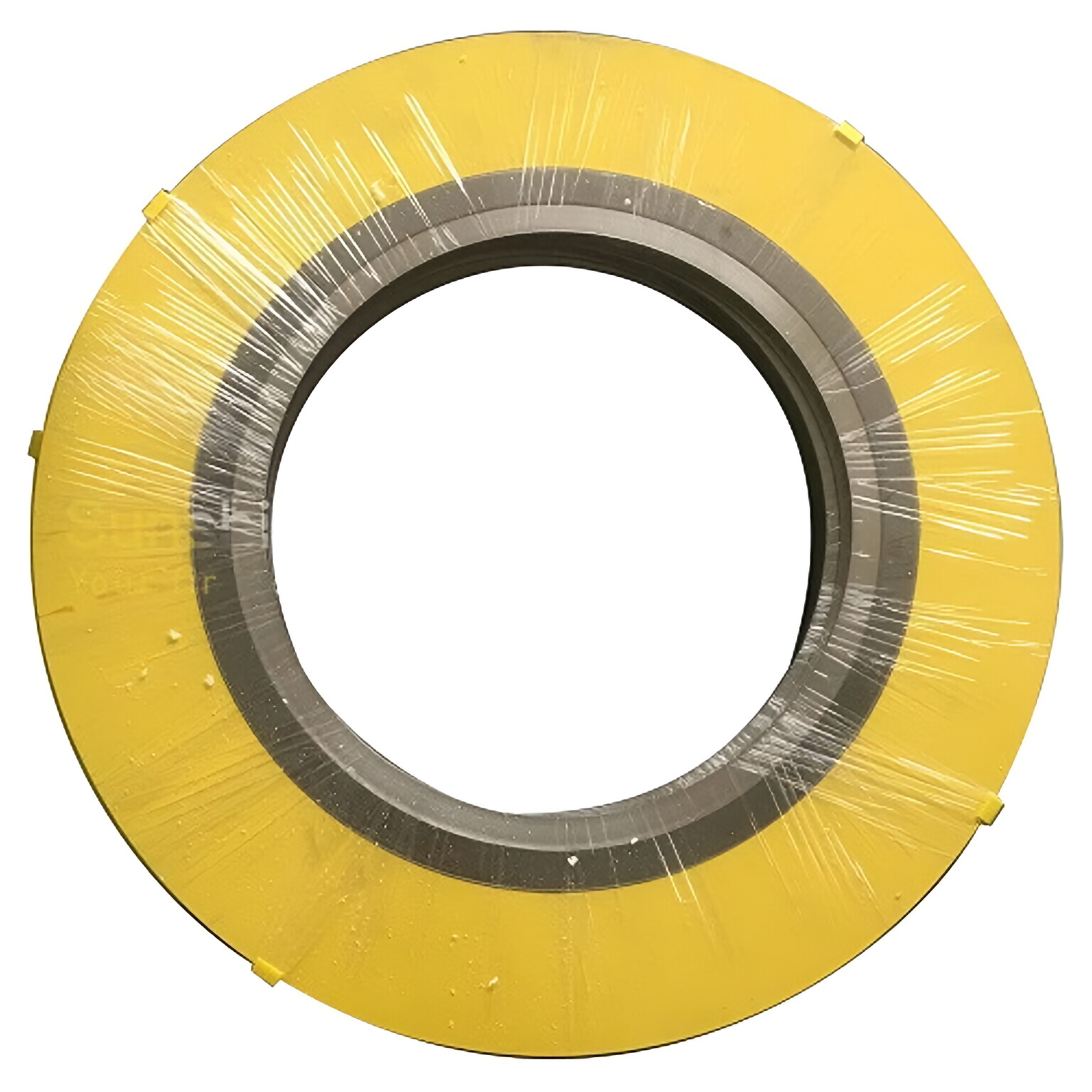
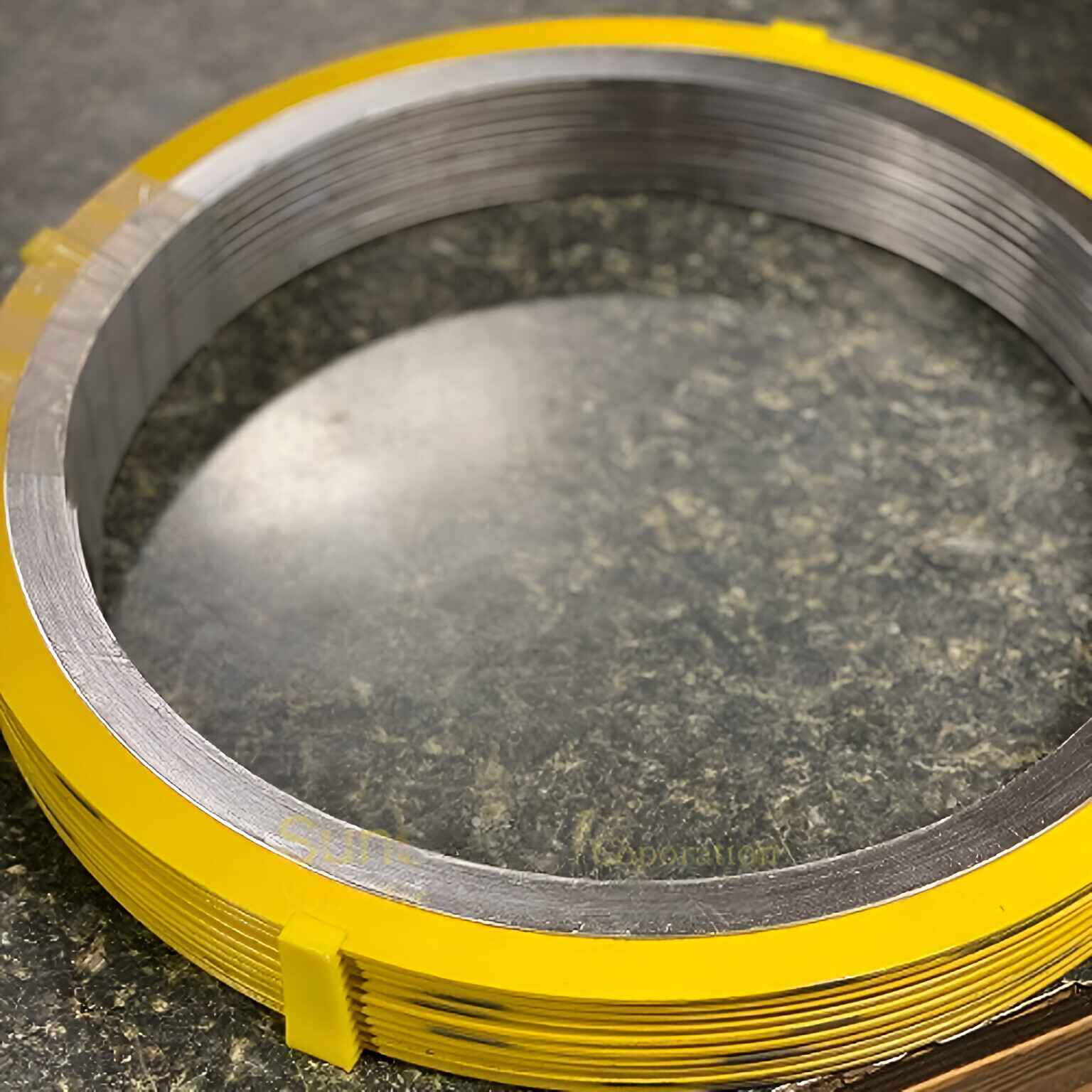
What are the common problems with ring type joint gaskets? If you’re a procurement specialist or maintenance engineer sourcing RTJ gaskets for high-pressure flange systems, you’ve likely faced unexpected leaks, premature failures, and costly downtime. Imagine it’s midnight, and your plant supervisor calls about a steam line leak at a 2500# flange connection. The culprit? A crushed, corroded, or incorrectly installed ring type joint gasket. Such scenarios not only compromise safety and compliance but also strain budgets and supplier relationships. This guide breaks down the root causes of RTJ gasket failures, backed by field data and engineering insights, so you can make informed purchasing decisions. From material mismatches to installation errors, we’ll equip you with actionable solutions—and introduce a partner who can help eliminate these headaches: Ningbo Kaxite Sealing Materials Co., Ltd.
Article Outline:
Pain Point Scenario: A refinery supervisor ordered 4-inch ring type joint gaskets from a low-cost supplier. Within three weeks, nearly half the newly installed joints began weeping during a hydrotest, forcing an unplanned shutdown and a six-figure rework bill.
The core problems behind such incidents boil down to mechanical overload, corrosion, and fitment issues. Here’s a breakdown of the most frequent RTJ gasket failure modes and their root causes:

Solution: Proactive procurement teams now specify gaskets that exceed standard ASME B16.20 requirements, with full traceability of raw material heats. At Ningbo Kaxite, every RTJ gasket undergoes surface inspection, hardness mapping, and dimensional verification before shipping, virtually eliminating the latent defects that cause field failures.
| Failure Mode | Typical Cause | Preventive Measure |
|---|---|---|
| Crushing / Plastic deformation | Gasket softer than flange groove; excessive bolt load | Match gasket hardness to flange specification (max 10 HBW softer) |
| Stress corrosion cracking (SCC) | Chloride-rich environment + susceptible alloy (e.g., 304 SS in seawater) | Use duplex or nickel alloy RTJ gaskets; specify NACE MR0175 compliance |
| Galvanic corrosion | Dissimilar metals in wet service | Select gasket material close to flange material in galvanic series |
| Improper seating / blowout | Foreign debris in grooves, flange misalignment | Enforce cleaning protocols; measure alignment with laser tools |
Pain Point Scenario: An offshore platform team selected standard soft iron RTJ gaskets for a wet CO₂ injection line. After six months, severe channeling corrosion forced a complete line shutdown during peak season, costing over $2 million in deferred production.
Material choice is the single most influential factor in Ring Type Joint Gasket reliability. Engineers must balance hardness, temperature limits, and medium compatibility. Below is a quick-reference selection table frequently used by our clients at Ningbo Kaxite Sealing Materials Co., Ltd.:
| Gasket Material | Hardness (HBW max) | Temperature Range | Typical Applications |
|---|---|---|---|
| Soft Iron (DIN 1.1003) | 90 | -29°C to 538°C | General hydrocarbons, steam, non-corrosive media |
| 304 Stainless Steel | 160 | -196°C to 760°C | Moderate corrosives, food processing |
| 316 Stainless Steel | 160 | -100°C to 800°C | Chloride-bearing media, chemical plants |
| Duplex 2205 | 270 | -50°C to 300°C | Seawater, sour service (H₂S) |
| Inconel 625 | 230 | -196°C to 1093°C | Highly corrosive, extreme shut-in pressures |
Solution: Ningbo Kaxite stocks RTJ gaskets in all these grades, with optional PTFE or zinc plating for added corrosion resistance. Our technical team also provides free material compatibility reviews—just send your process data to [email protected].
Pain Point Scenario: A contractor installed 20 brand-new RTJ gaskets without using anti-seize compound and followed a single-pass, uncalibrated torque sequence. One week later, four flanges leaked during normal operation, triggering a safety audit and emergency re-bolting work at $15,000 per joint.
Even the best gasket cannot compensate for poor installation. The most common installation problems include inadequate lubrication, uneven bolt preload, and flange face scratches. Addressing these requires a disciplined approach, as summarized in the table below:
| Installation Error | Consequence | Best Practice |
|---|---|---|
| Skipping anti-seize on threads | Uneven bolt tension; galled studs | Apply consistent MoS₂ or metallic-based anti-seize to bolt threads and nut faces |
| Cross-pattern bolting ignored | Flange distortion; uneven gasket compression | Use 3-pass torque sequence per ASME PCC-1; tighten in cross pattern |
| Reusing old flange grooves without inspection | Gasket blowout from damaged surface | Check groove surface finish (≤125 Ra) with a comparator; repair or replace if pitted |
Solution: To support error-free installations, Ningbo Kaxite Sealing Materials Co., Ltd. supplies each order with an installation checklist and live video support. Our clients report a 70% reduction in commissioning leaks after adopting these protocols.
A: In services like heat exchanger steam lines that cycle between ambient and 500°C, RTJ gaskets face thermal relaxation and differential expansion. Common failures include gasket springiness loss and groove galling. The fix? Specify gaskets with controlled hardness and a higher resilience alloy, such as annealed 304L, and perform hot re-torquing after the first thermal cycle. Ningbo Kaxite’s gaskets for cyclic service come with detailed heat treatment certificates, ensuring consistent post-yield behavior.
A: Often overlooked, storage-related damage includes dents from improper stacking, moisture-induced pitting on carbon steel rings, and loss of protective coating integrity. These defects can initiate leakage paths later. Our packaging standard at Ningbo Kaxite Sealing Materials Co., Ltd. includes VCI paper, individual compartment boxes, and silica gel desiccants, guaranteeing gasket integrity upon arrival. Always inspect the ring surface under a magnifier before acceptance—if depth of any pit exceeds 0.4 mm, reject the lot.
By now you can see that most RTJ gasket problems—from material mismatches to installation slips—are entirely avoidable with the right partner. Ningbo Kaxite directly addresses these pain points by offering full-spectrum material traceability, pre-shipment inspection reports, and free engineering support. Have a challenging application? Share your operating conditions with us and we’ll recommend the exact gasket specification, including hardness, plating, and installation torque values.
For over 15 years, Ningbo Kaxite Sealing Materials Co., Ltd. has been a trusted manufacturer of ring type joint gaskets, spiral wound gaskets, and flange insulation kits. Our facility is ISO 9001-certified, and all RTJ gaskets meet or exceed ASME B16.20, API 6A, and NACE requirements. Whether you need standard soft iron rings or custom Inconel 625 profiles with special coatings, our team delivers consistent quality and competitive lead times. Ready to eliminate gasket failures from your supply chain? Contact us at [email protected] for a quotation or technical consultation.
Zhu, L., Cheng, G., & Baker, A., 2022. Failure analysis of ring-type joint gaskets in high-pressure hydrogen service. International Journal of Pressure Vessels and Piping, 198, 104668.
Thompson, R., & Harris, P., 2020. Corrosion fatigue of RTJ gaskets in sour gas environments. Corrosion Science, 175, 108880.
Martinez, J., Liu, Y., & Okonkwo, C., 2021. Effect of flange surface roughness on ring joint sealing performance. Journal of Pressure Vessel Technology, 143(4), 041502.
Williams, D., & Singh, R., 2019. Comparative study of soft iron and stainless steel RTJ gaskets under thermal cycling. Engineering Failure Analysis, 105, 87–96.
Chang, M., 2023. Avoiding gasket-induced flange leakage: A practical guide. Hydrocarbon Processing, 102(5), 45–51.
Patel, S., & O’Connor, F., 2018. Galvanic corrosion in dissimilar metal ring-type joints. Materials and Corrosion, 69(2), 213–221.
Rojas, E., Smith, A., & Lee, K., 2021. In-service re-torquing of RTJ gaskets: Procedures and outcomes. ASME Pressure Vessels and Piping Conference, PVP2021-62248.
Nguyen, T., & Persson, J., 2020. Predicting remaining life of ring joint gaskets with acoustic emission monitoring. NDT & E International, 114, 102278.
Ghosh, P., & Yamamoto, H., 2022. Finite element analysis of RTJ gasket stresses under non-uniform bolt loading. Journal of Mechanical Engineering Science, 236(11), 6212–6224.
Mehta, A., 2019. Role of surface coatings in extending RTJ gasket service life. Surface and Coatings Technology, 374, 884–892.