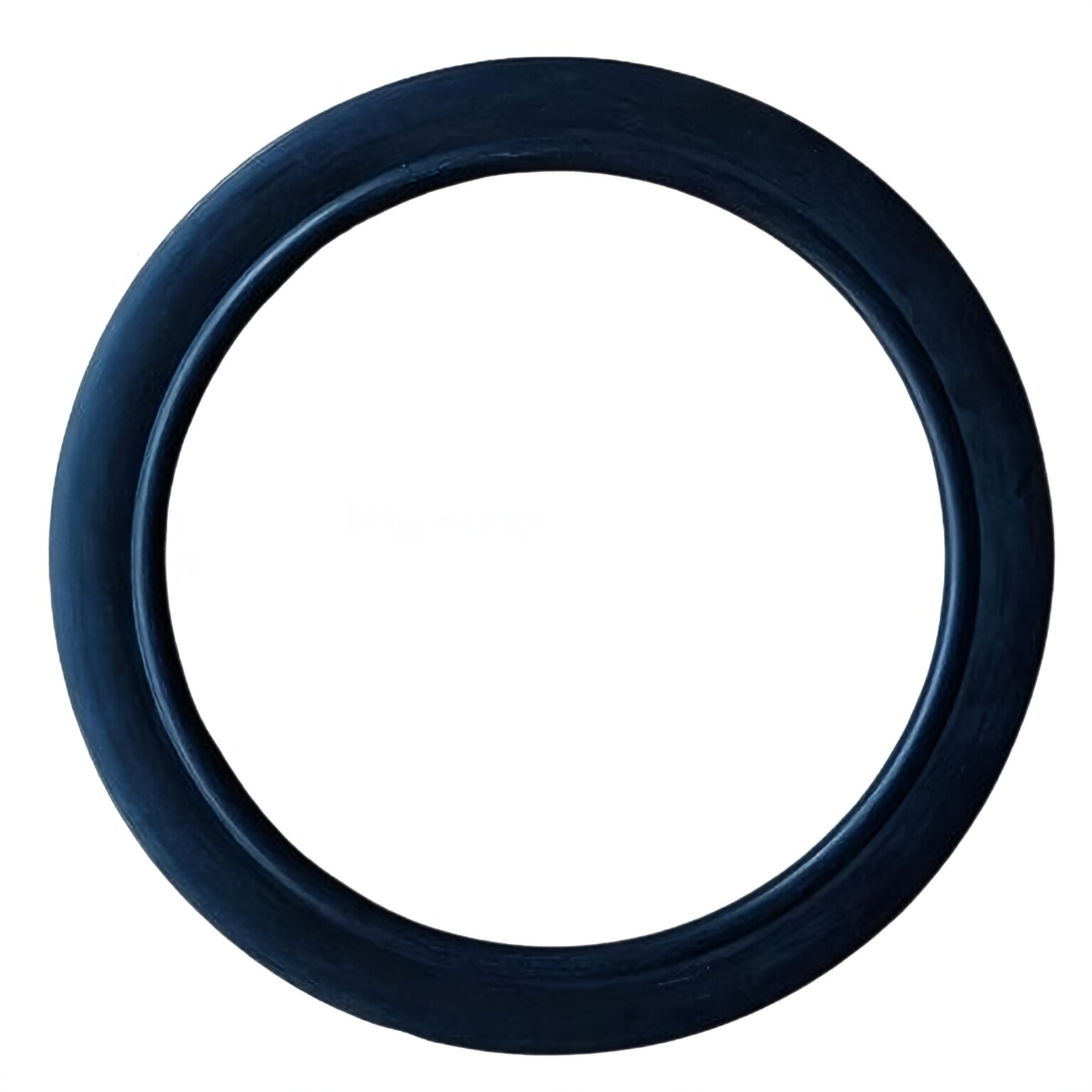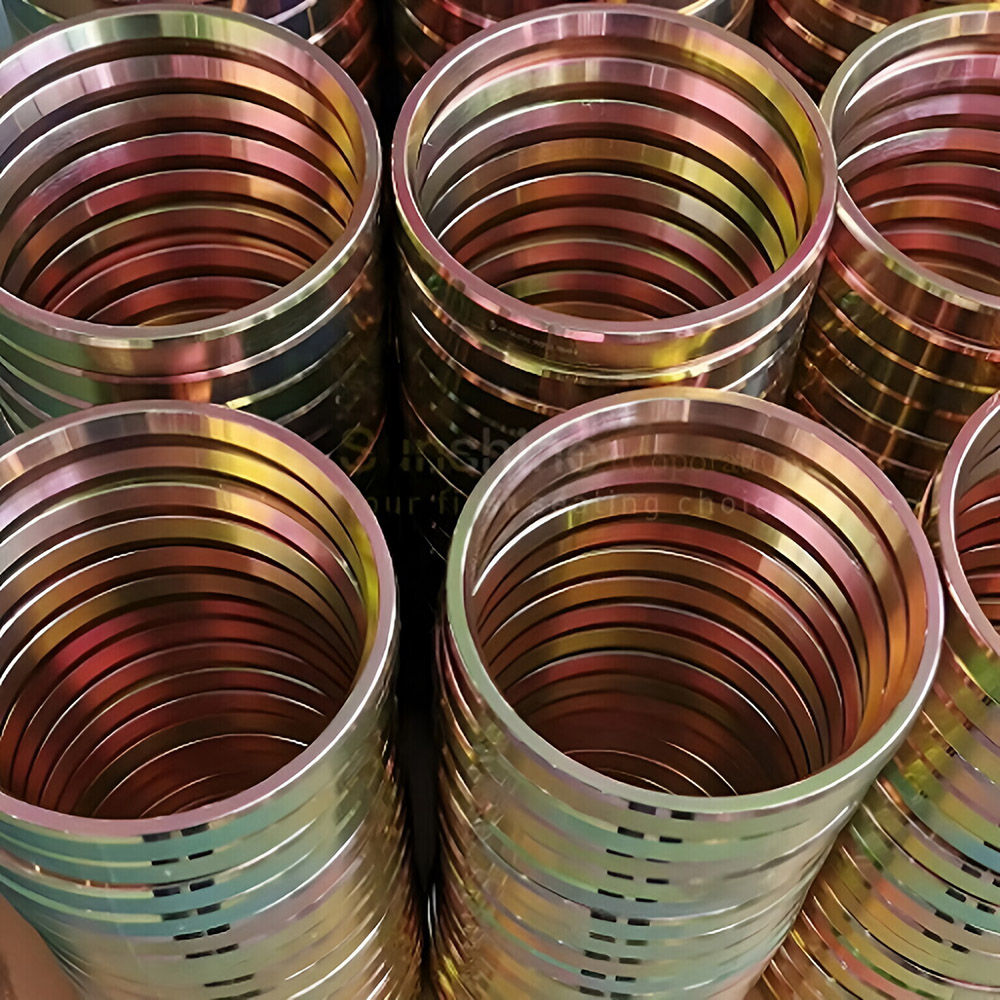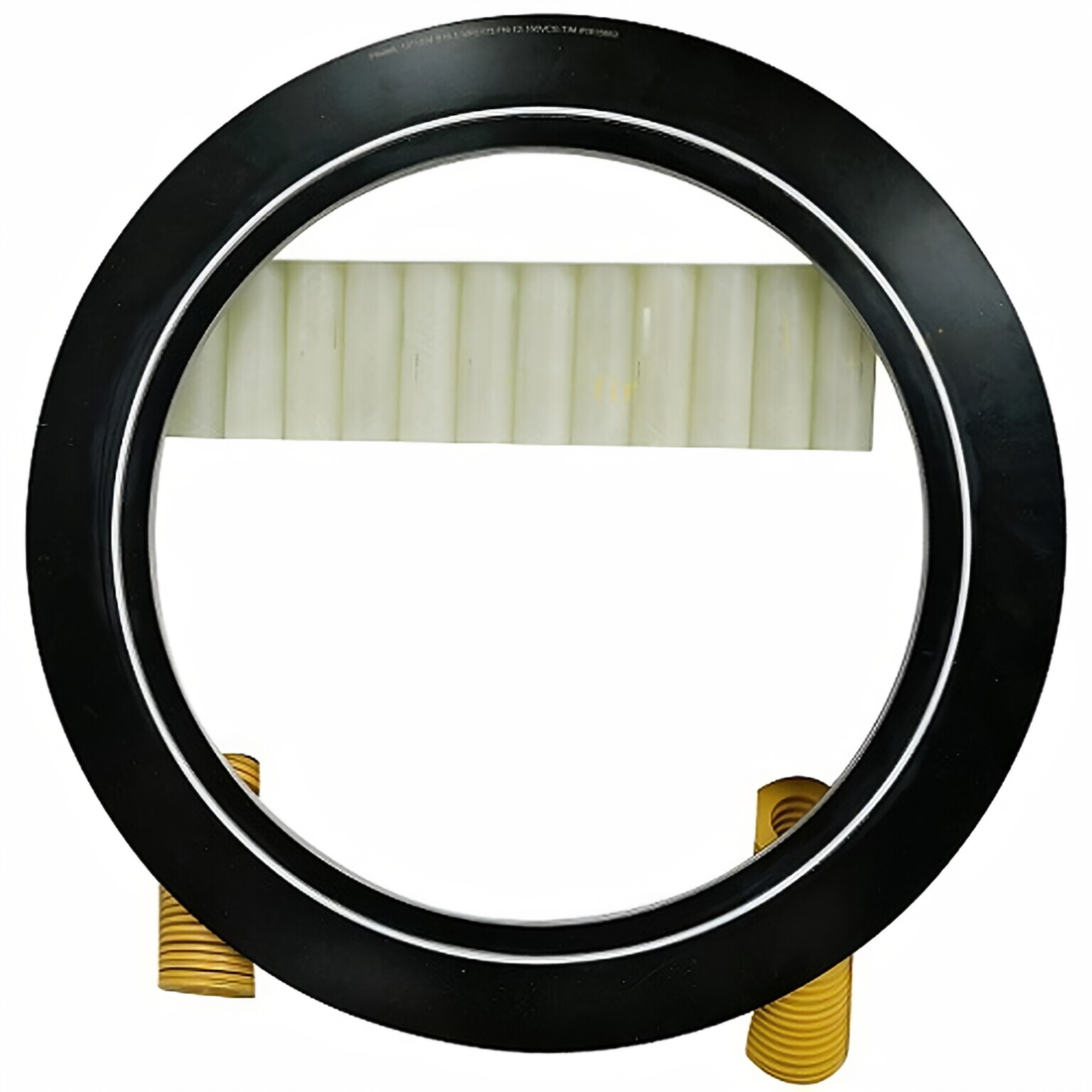
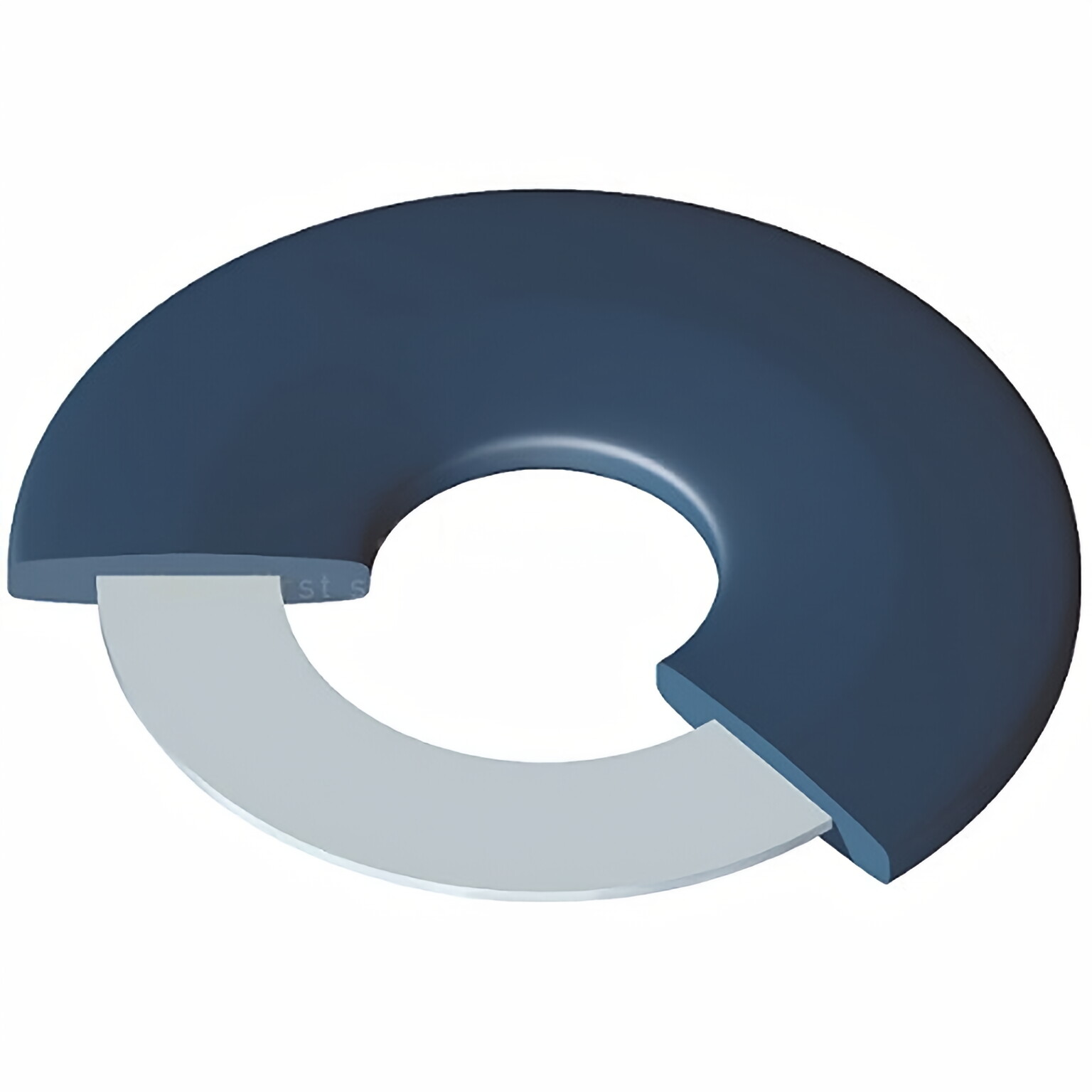
Kaxite Sealing manufactures G-ST rubber-steel profile gaskets with a steel ring vulcanised directly into the rubber body. The vulcanised steel ring acts as a self-centering element, so the gasket needs no wedges and no additional seals to stay in position during installation — even on difficult joints such as oblique bends in pipelines laid on uneven terrain where straight-line construction is impractical.
Because the wedge-shaped profile absorbs temperature and pressure variation and distributes torque force across the flange, the G-ST gasket seals properly on enamelled flanges and flanges with rough or uneven surfaces. It does not require the high torque demanded by conventional flange gaskets, which matters when the flange is thin, non-metallic or otherwise fragile.
Standard compounds are EPDM 70° Shore A and NBR 70° Shore A, both certified for their primary service — NBR to DIN-DVGW per EN 682 class GB for gas, EPDM to KTW D1/D2, 1.3.13 BFA and W270 for potable water. FPM/FKM (Viton®) is also available. Diameters cover DN15 to DN1200, and five standard profile types cover the full range of steel, plastic and GRP pipeline joints. Custom sizes, OEM private-label packaging and flexible MOQ are available for B2B buyers.
Suitable for gas conduits. The standard choice for natural gas, LPG and town gas distribution pipelines.
Certified for potable water contact. Approved for drinking water distribution and hot water service.
For high-temperature or aggressive chemical service where EPDM and NBR are not suitable.
The G-ST profile itself is produced to EN 1514-1 (PN6–40) and ASME B16.20, and can be manufactured to suit other flange standards on request.
A G-ST rubber-steel profile gasket is not a simple rubber ring. The distinguishing feature is a steel ring vulcanised directly into the rubber body during the moulding process. That steel ring serves two purposes: it holds the gasket geometry stable under bolt load, and it centres the gasket on the flange so the sealing element stays in the correct position during tightening.
On a conventional rubber or sheet gasket, the installer has to align the gasket carefully and often needs wedges or extra sealant to keep it in position — a real problem on vertical or overhead joints, or where the pipe has to be pulled into alignment during assembly. The G-ST eliminates that step entirely. The vulcanised ring holds the profile in place, and the wedge shape of the rubber body lets the gasket absorb angular misalignment at the joint.
This is what makes the G-ST the standard choice for underground pipeline installations, where terrain and settling mean the flange faces rarely line up perfectly, and where the joint has to stay sealed for decades without maintenance access.

The G-ST profile delivers five specific advantages that matter on pipelines where re-tightening is expensive and leaks are unacceptable. Each one addresses a failure mode that a conventional rubber gasket or a flat sheet gasket would suffer from.
Unlike other flange gaskets, the G-ST does not need to be compressed at high bolt load to seal. That makes it suitable for thin, non-metallic or otherwise fragile flanges — where excessive torque would distort the flange or crack the pipe stub.
The wedge-shaped rubber profile conforms to enamel-lined flanges, rough cast surfaces and uneven flange faces that would leak with a flat gasket. It also handles oblique bends and non-parallel flange faces on uneven terrain.
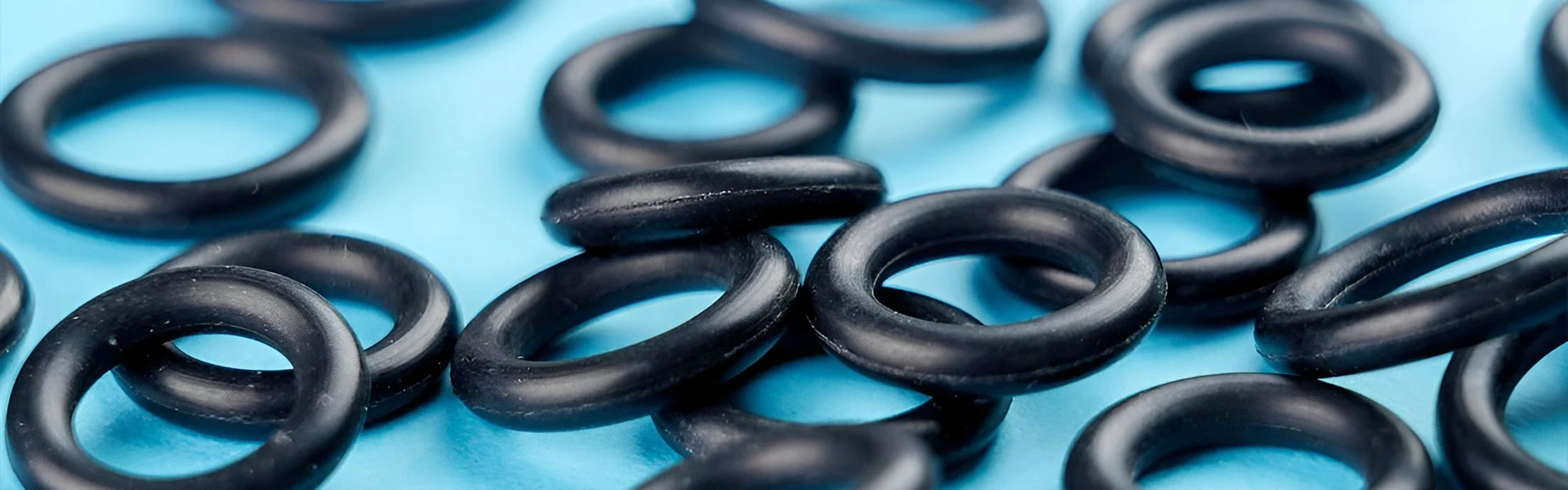
Due to the gasket's wedge-shaped design, the G-ST rubber-steel profile gasket is a perfect alternative to the classic G-ST with an O-ring on the inside diameter — with easier installation and fewer failure points at the O-ring groove.
The elastic rubber body absorbs thermal expansion and pressure fluctuation without losing contact stress, so the joint stays sealed through the daily and seasonal cycles of an underground pipeline.
Standard EPDM and NBR compounds both have a proven service record in water, gas and oil pipelines. Long compound life translates directly into lower lifecycle cost — fewer interventions, less downtime, no need for buried-joint excavation.
The G-ST gasket is engineered for pipelines, especially underground installations, on steel, plastic or GRP pipes carrying gas, water, oil or other liquids. It is the standard choice where the joint has to stay sealed without maintenance access and where the flange faces may not line up perfectly during installation.
NBR compound with DIN-DVGW approval for natural gas, LPG and town gas distribution networks.
EPDM compound with KTW D1/D2 and W270 approvals for drinking water mains and service connections.
Standard G-ST-10 for steel flange joints on water, gas, oil and process pipelines.
G-ST-PS-11 and G-ST-PK-12 for PE, PP and GRP pipelines with plastic stub and loose flanges.
Where straight-line construction is impractical, the wedge profile and self-centering ring follow the angle of the pipe joint.
G-ST-P/KN-13 for extreme operating conditions where the flange face is partially coated or the environment is aggressive.
Five standard profile types cover the majority of steel, plastic and GRP pipeline joints. Each is identified by its own part number. If you are not sure which type applies to your flange arrangement, send us the pipe material, the flange standard and the joint description and we will recommend the correct profile.

The very common classic rubber-steel gasket for various applications. Standard choice for steel flange joints on water, gas and oil pipelines when no special condition applies.

Used for various applications — the top choice for joints connecting non-metallic (plastic or GRP) and steel flanges, where the different stiffnesses of the two flange materials would otherwise cause uneven bolt loading.

For plastic pressure pipelines made of PE and PP with plastic stub and loose flange. Flange dimensions are similar to DIN 2501 PN10 — the standard reference for polyethylene water and gas distribution.

Used for various applications — the top choice for partially coated flanges and extreme operating conditions. Handles flange faces where part of the sealing surface is protected by coating and part is not.

A customized rubber-steel gasket with a visible stainless steel insert. Used where the flange geometry is non-standard or where the customer needs to see at a glance that the correct stainless steel grade is fitted.
Three standard compounds cover the majority of pipeline duties. Choose based on the medium and temperature. For gas service, the DIN-DVGW approval requires NBR. For potable water, the KTW and W270 approvals require EPDM.
The standard compound used in the elaboration of the G-ST gaskets is either EPDM or NBR, assuring long life and consequently economical benefits. If your medium is neither gas nor potable water, send the chemical name, concentration and operating temperature and we will recommend the correct compound.
To return a firm unit price, lead time and available samples, send the following five items with your enquiry. If you already have a flange drawing or a sample of the existing gasket, attach that instead — we will match it directly.
DN15 to DN1200, or specific gasket dimensions if non-standard.
EPDM for potable water, NBR for gas, or FPM/FKM for high temperature.
G-ST-10, G-ST-PS-11, G-ST-PK-12, G-ST-P/KN-13 or G-ST-P/OE-14.
EN 1514-1 (PN6–40), ASME B16.20 or another standard.
Order quantity and destination port so we can quote freight-inclusive or FOB.
If you are unsure which profile type suits your flange arrangement, send a photo or a sketch of the joint and we will recommend the correct G-ST type. Custom diameters, non-standard dimensions and private-label packaging are all available.
Send your nominal diameter, compound, profile type and flange standard. Our sales engineers reply with a quotation, available samples and the packing options for your market.
Address
No 432 Zhenhai Middle Road, Luotuo Street, Zhenhai District, Ningbo City, Zhejiang China